
Cruise ship RFID wristbands
One wearable.
The whole voyage.
From gangway to shore, and back aboard.
RFID wristbands and CR80 cabin key cards, made to order for access, dining, excursions and the systems you already run aboard.
Embarkation & reboardingCabin & suite accessDining, spa & amenitiesTender & excursion workflows
Two formats. One voyage.
Wristband or cabin key card?
A cruise guest carries fewer loose objects than a hotel guest, and spends half the voyage in swimwear. We make both halves: a sealed wearable for deck, pool, spa and tender, and a CR80 cabin key card for the door. Most vessels need both. The cabin lock and the tender handheld are rarely approved for the same credential, and pretending otherwise is how programs get reprinted. Made to order since 2000, from 500 units per design.
01
Cruise ship RFID wristbands for the full voyage
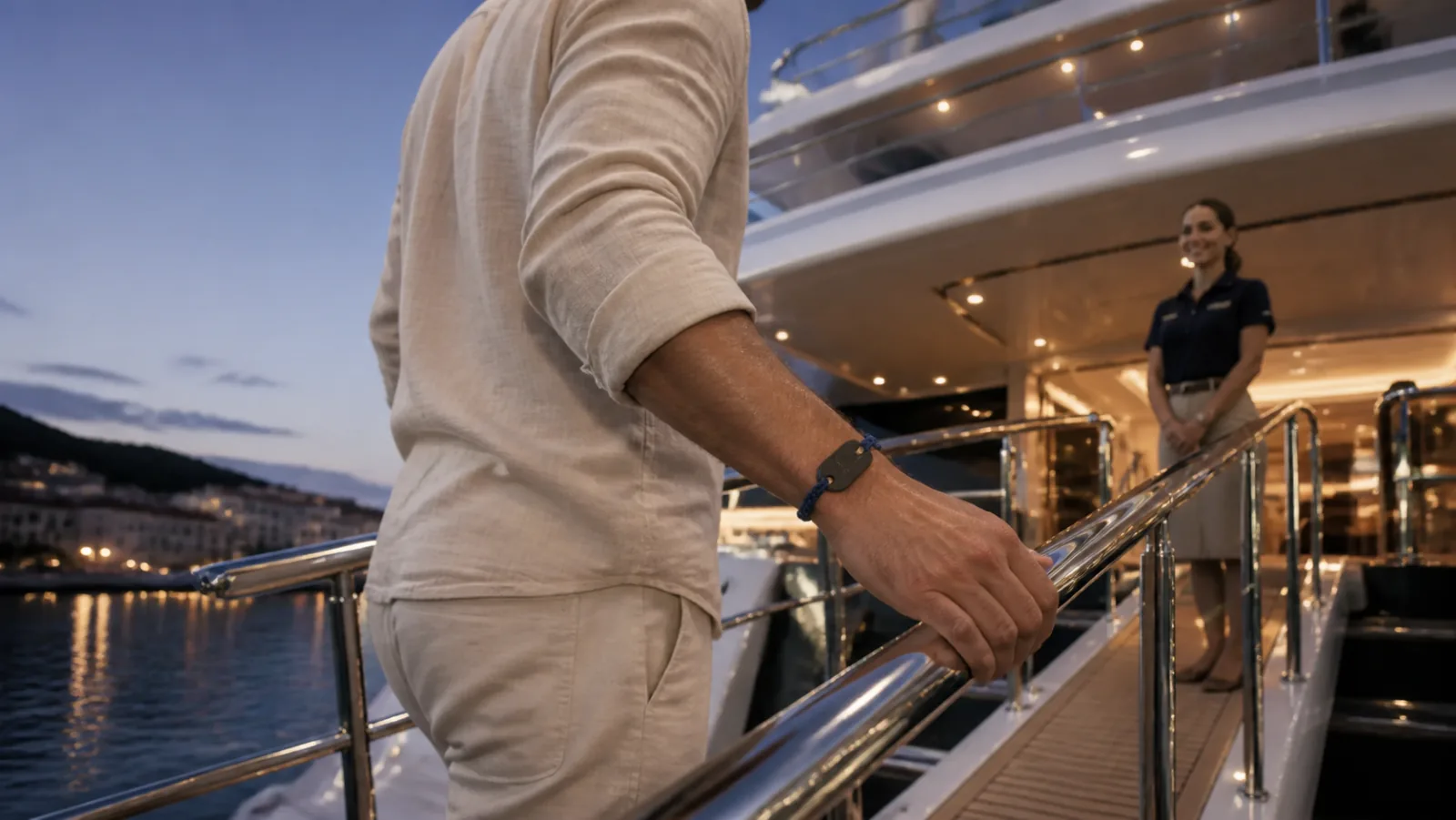
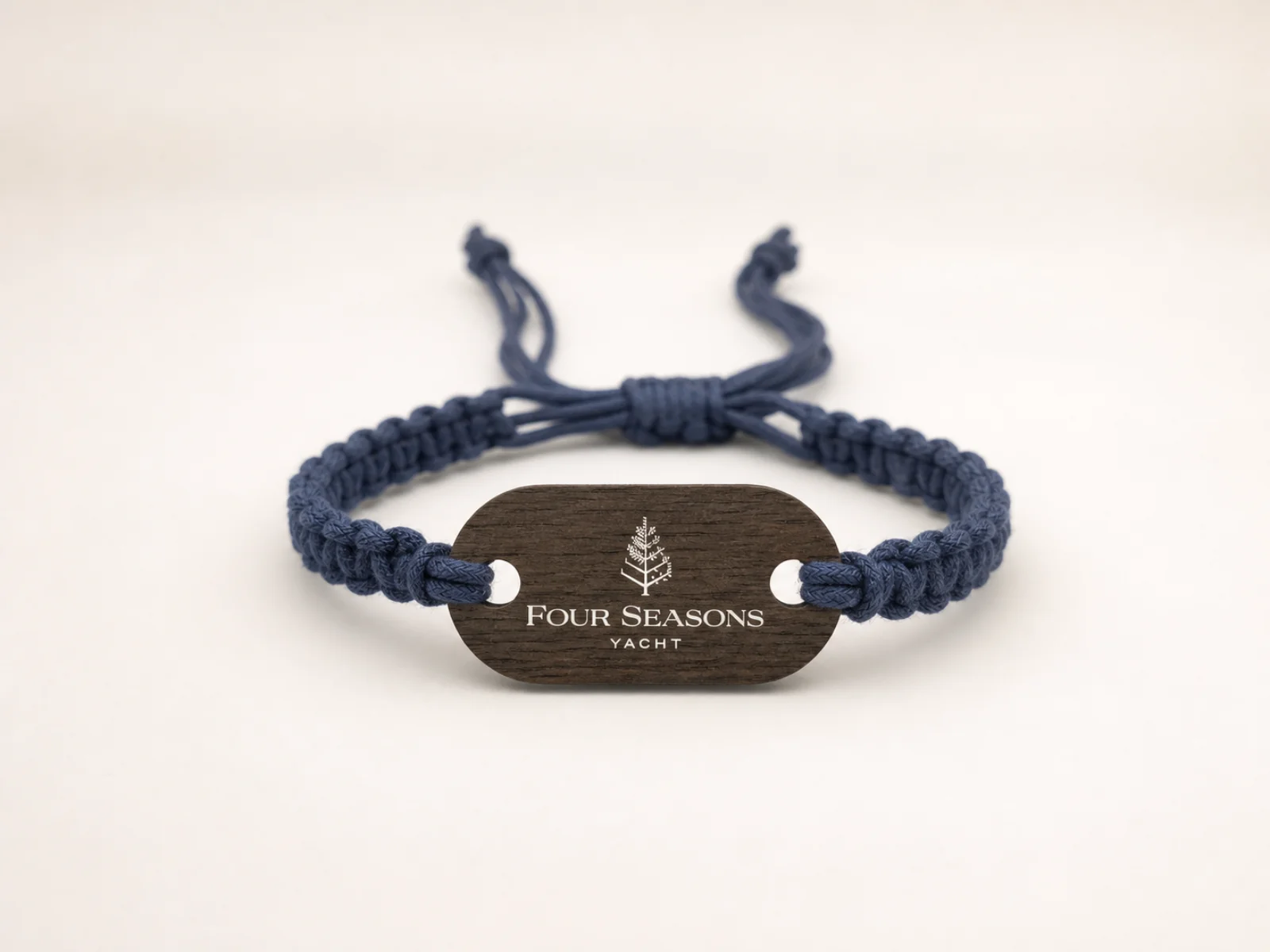
A multi-day wearable should feel like hospitality, not disposable admission media. We weave the cord by hand, seal the RFID inside a natural-wood plaque and close it with a sliding-knot clasp that fits adult, youth and child wrists off one run. Its IP67 rating covers temporary immersion; confirm suitability for sea-water, pool-water and shower exposure with separate exposure evidence and finished-sample testing under the intended conditions. We pick the chip from your reader specification and build the cord around voyage length, salt air and sunscreen.
- Multi-day guest wear
- IP67 sealed
- Reader-matched RFID
02
Cabin and suite RFID key cards
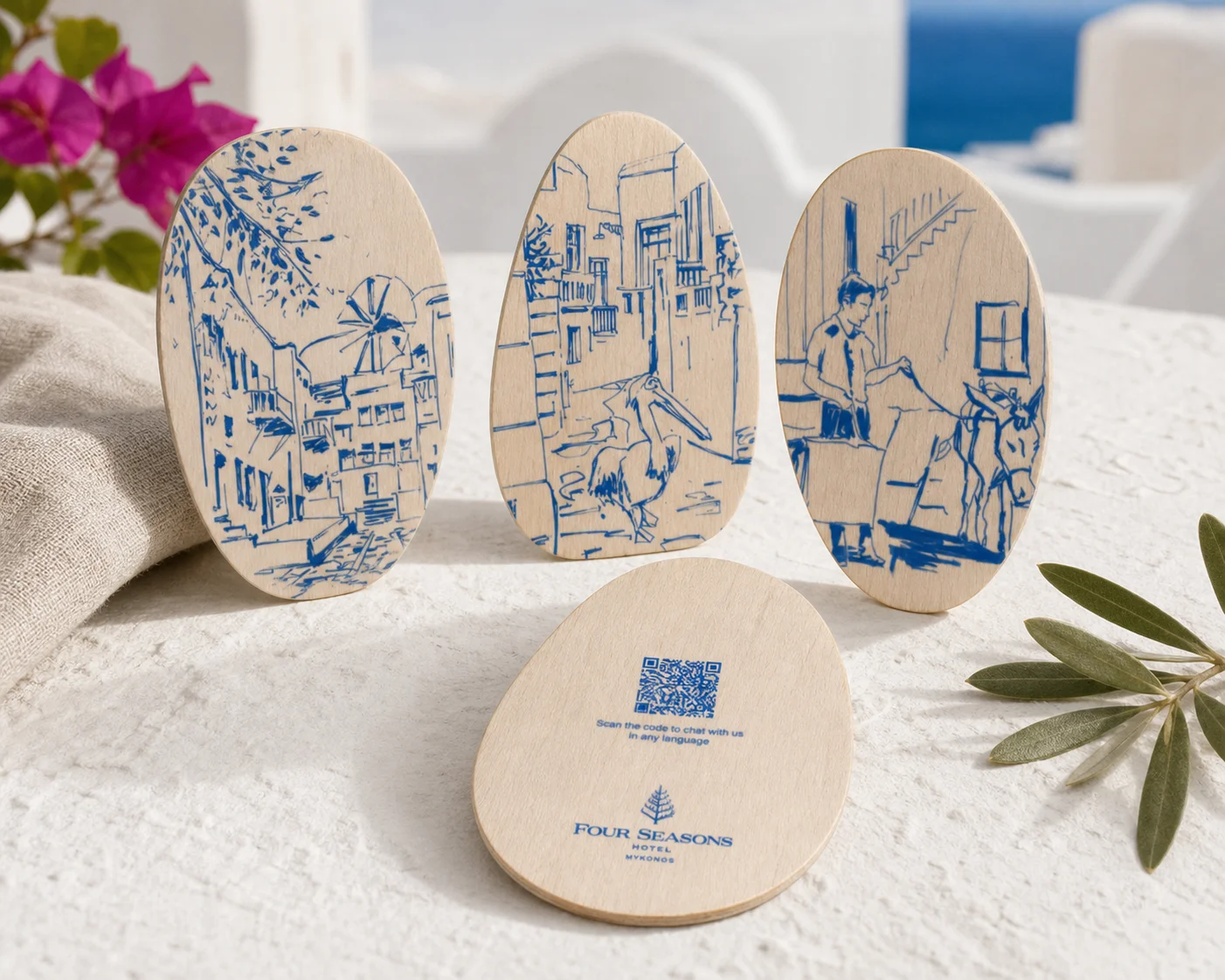
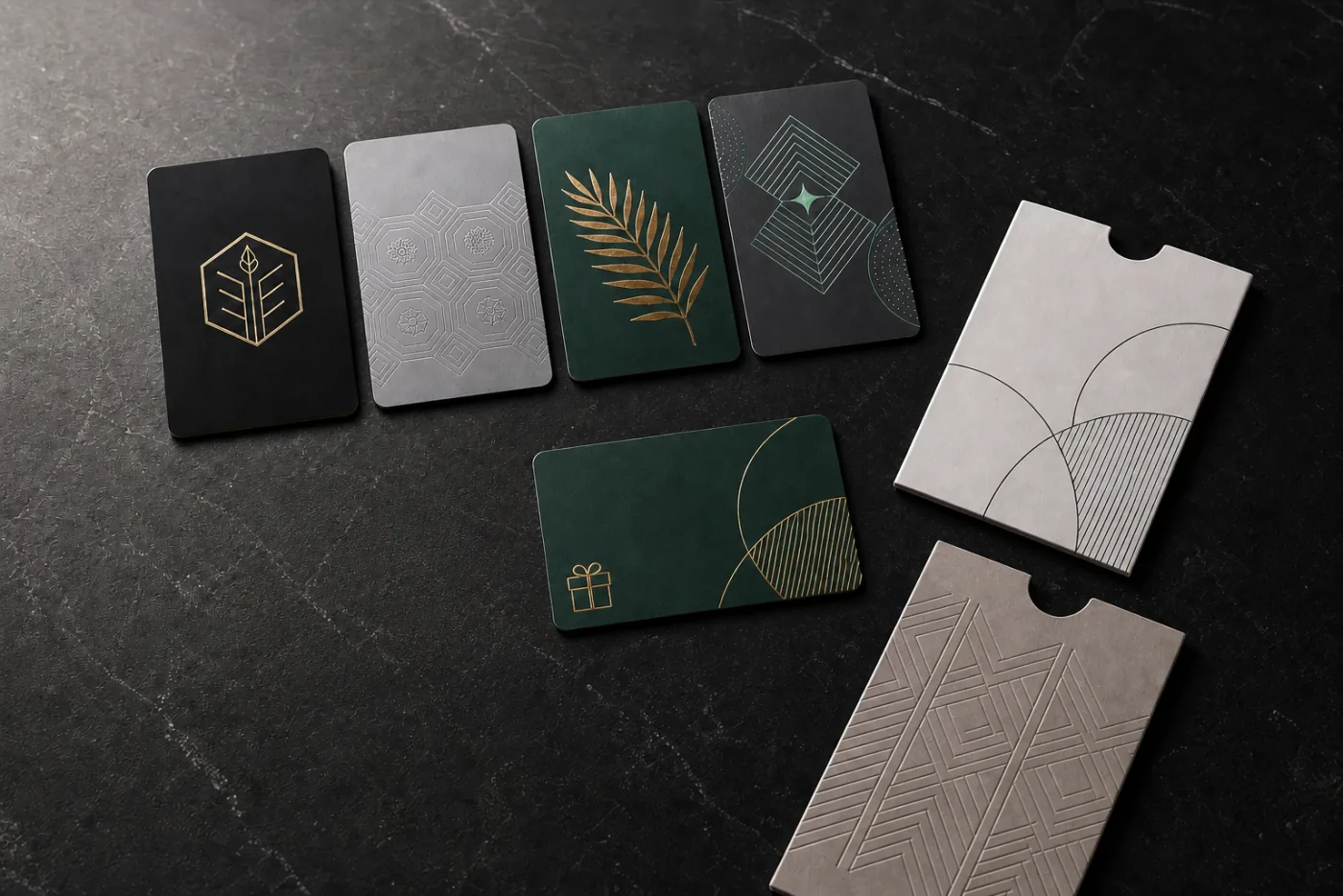
We do not force a wristband into a cabin-lock environment approved only for cards. We cut the cabin key at CR80, 0.76 mm (30 mil), to ISO/IEC 7810, in thin natural wood, recycled PVC, PPH BioBoard or premium laminate. Same dimensions in every material, so it feeds your existing encoders without a tray change. Artwork follows the wearable program. The chip follows the lock. Finished sample in 7-10 days.
- CR80, 0.76 mm
- Wood to recycled PVC
- Tested on your door
03
Onboard dining, spa and cashless-ready wristbands
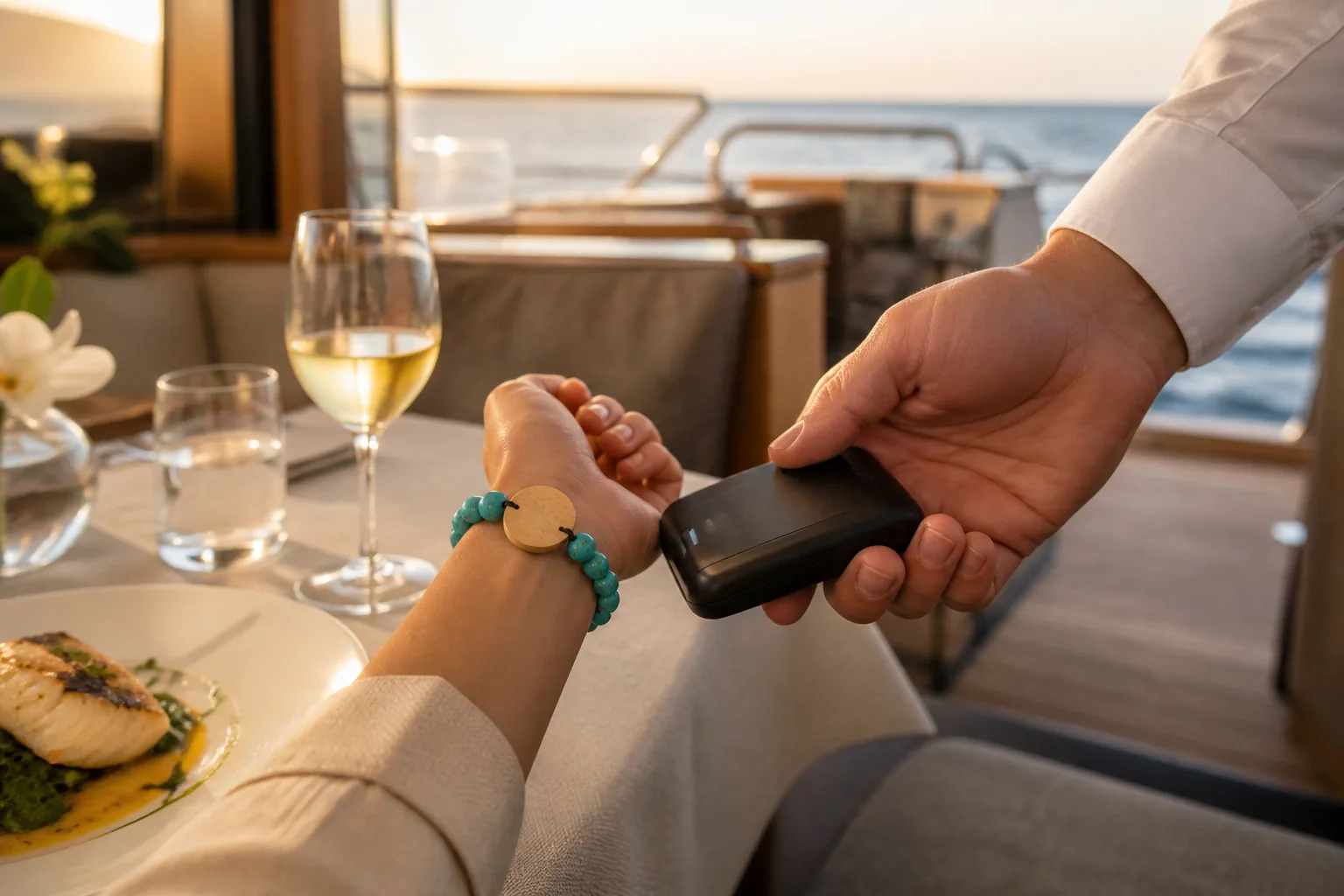
Dining, spa and onboard purchases often sit inside different platforms, and those platforms rarely accept the same band. We carry the approved token on whichever body the venue accepts, wristband or card. Tier goes into the cord color, the wood species or an engraved guest number, which works at a distance and belongs on a yacht.
- Supported POS workflows
- Spa & private-area access
- Discreet tier recognition
04
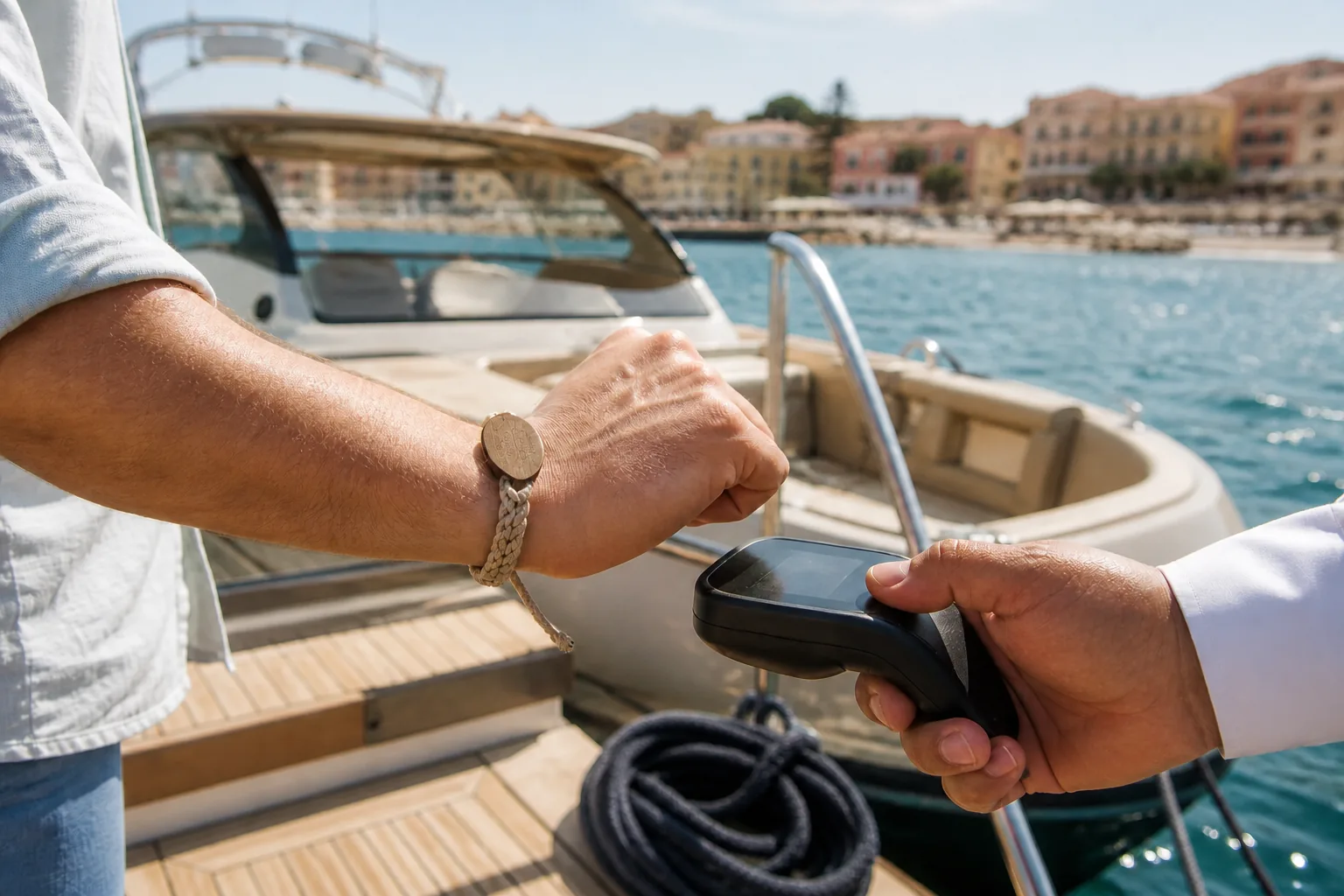
Tender, reboarding and shore-excursion wristbands
Between vessel, tender and shore the wristband has to stay attached and present fast, because the guest has one hand on a rail and the other on a bag. A wearable beats anything they have to dig for. Where your excursion workflow supports it, we build the wearable. Where it does not, we build the card and match the two.
- Tender checkpoints
- Excursion grouping
- Fast wearable presentation
05
Crew IDs, visitor cards and supporting print
We make the rest of the program too: crew and contractor photo IDs, visitor badges, gift cards and printed cabin-key sleeves. These carry different security and data rules from a guest wearable, so we keep the specifications apart and the artwork together. Clear portraits and department color coding let a purser tell crew from guest across a passageway.
- Crew & contractor IDs
- Gift and event cards
- Sleeves & luggage support
The maritime guest journey
Which format works at each touchpoint?
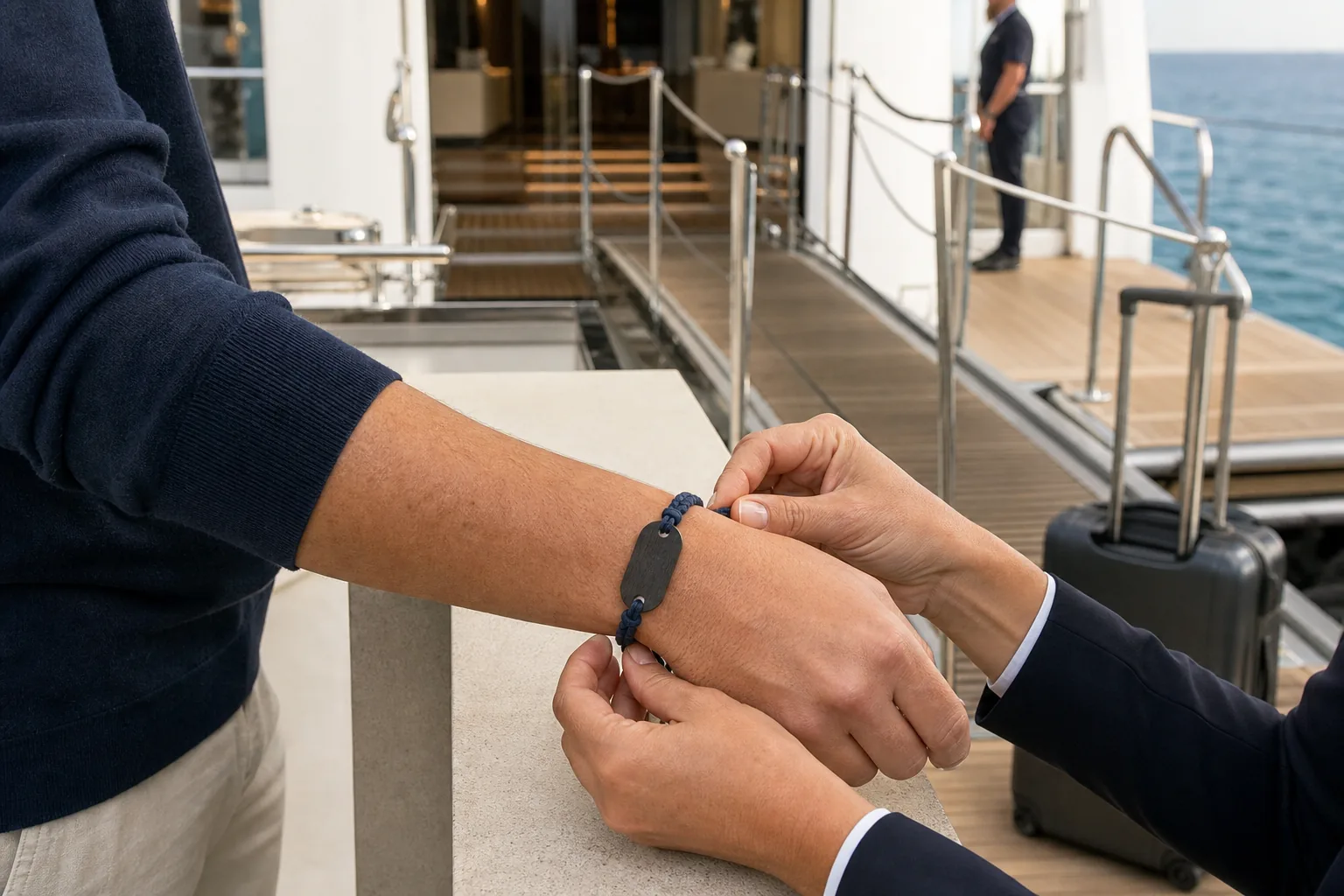
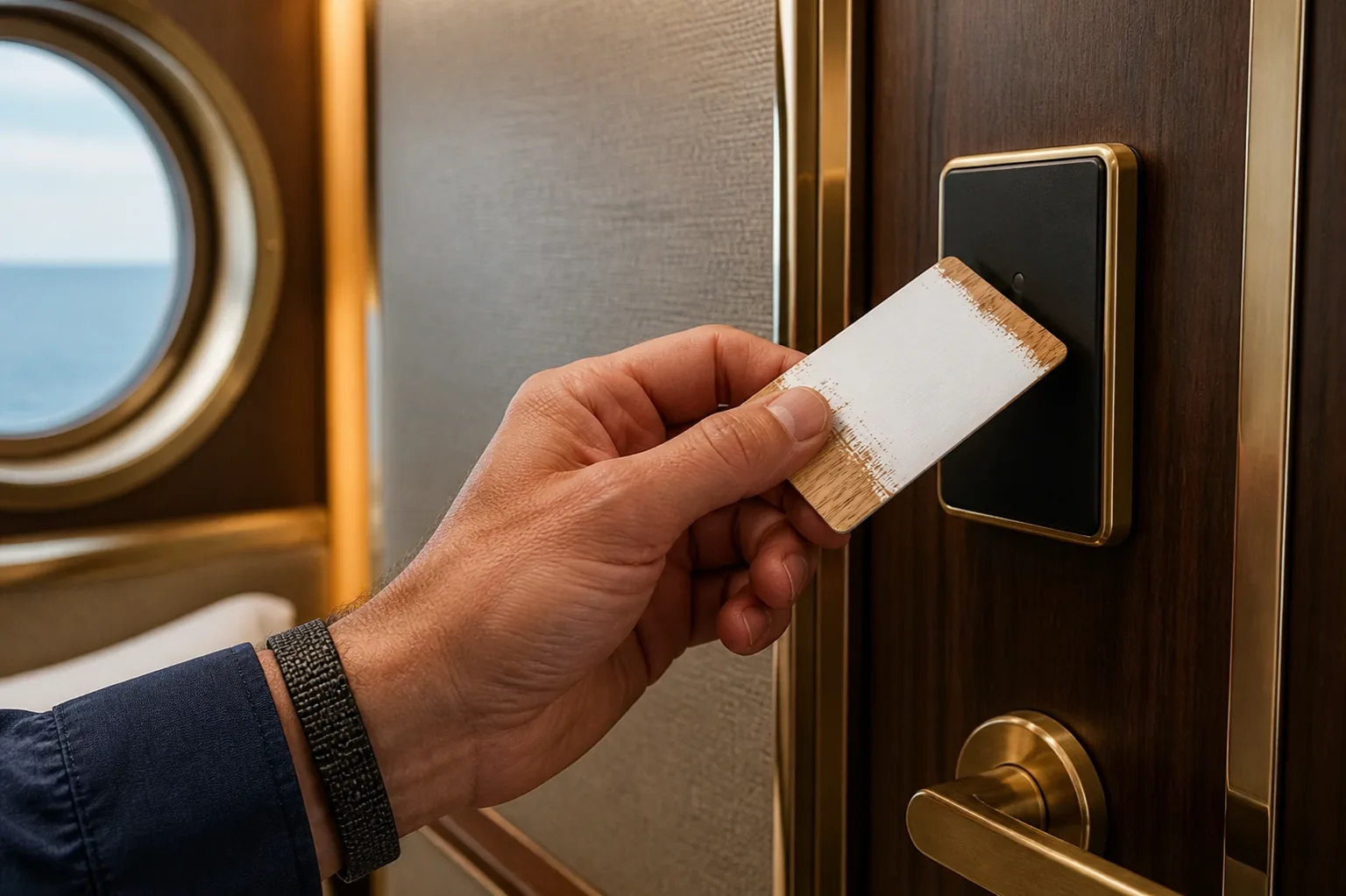
Five custom scenes show the format we would put at each point of the voyage: a navy woven wearable at embarkation, a natural wood cabin key, a bead dining bracelet, a sand-cord tender wristband and a wood-bead keepsake.
01Personalized by sailing02Packed in issue sequence03Ready at the gangway
01 / 05
Recommended format
RFID wristband + optional cabin key
We personalize and sort the wearables before they ship, by sailing and tier, so your gangway team hands over a finished band, not a kit. Where the lock needs a card, it travels in the same pack, numbered to the same guest.
01Cut to your lock spec02CR80, 0.76 mm03Sample tested aboard
02 / 05
Recommended format
Natural wood RFID cabin key
Where the lock takes a card rather than a wearable, we cut a thin wood key at CR80, 0.76 mm, to your confirmed lock and encoder specification, matched to the wristband in wood and finish. You test it on a real cabin door before we run anything.
01Tier set in the cord02Bead, not plastic band03Guest numbering
03 / 05
Recommended format
Turquoise bead RFID wristband
At a supported restaurant or bar the guest presents a bead bracelet that reads more like jewelry than admission media. We set the tier in the cord and the bead, so staff can read it across a room without a plastic band at dinner.
01Sealed inlay, IP6702Sliding-knot clasp03Stays on the wrist
04 / 05
Recommended format
Sand-cord RFID excursion wristband
At the tender platform the wearable stays on the wrist while the guest handles steps, rails and bags. We seal the RFID inside the plaque and build to IP67, so a wet gangway changes nothing about the read.
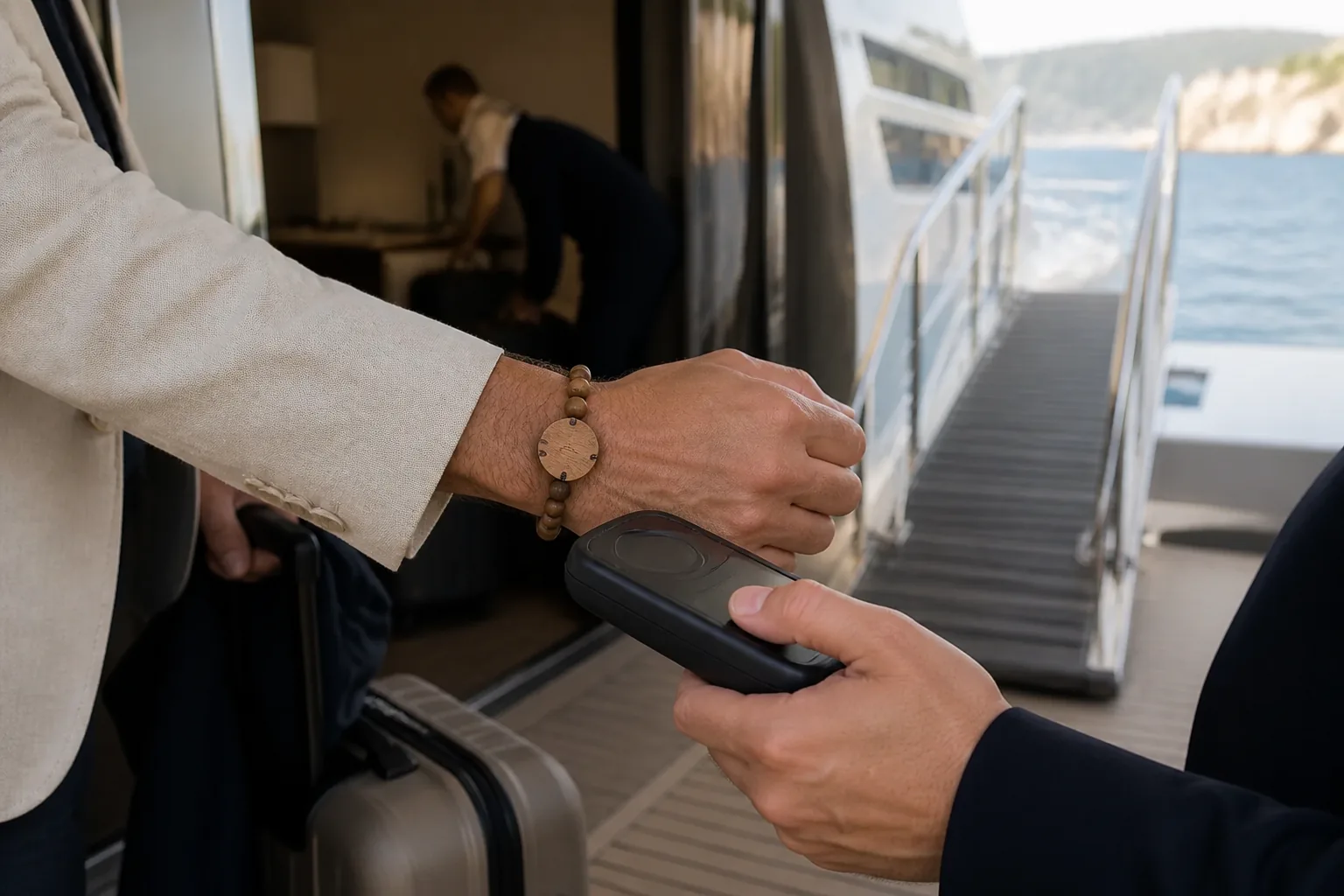
01Keepsake or collected02Decided at brief stage03Replacement stock included
05 / 05
Recommended format
Wood-bead RFID departure bracelet
A wood-bead bracelet can leave with the guest. A woven-cord wristband can come back for controlled reuse. Tell us which at brief stage: it changes the closure, the packing and the replacement stock. Collected reuse is also greener on paper than in practice, since every returned band gets checked, cleaned and re-encoded.
Maritime construction and comfort
Which material suits a week at sea?
Every wearable here is rated IP67 and made to order. The reader specification decides the chip; comfort and drying decide whether a guest keeps it on for a week. Our sliding-knot clasp fits adult, youth and child wrists off one run.
| Format | Operational profile | Best suited to | Design direction |
|---|---|---|---|
| Wood + woven cord | Hand-woven cord bracelet, sealed wood RFID plaque, sliding-knot clasp, IP67. | Multi-day guest wear on deck, at the spa and ashore | Laser engraving, UV print and custom plaque shape |
| Wood-bead bracelet | Jewelry-like reusable bracelet with polished beads and a sealed RFID centerpiece. | Luxury tiers, private yachts and hosted guest groups | Wood species, bead selection and discreet tier cues |
| Wood cabin key | Thin card with visible natural grain, cut to CR80, 0.76 mm (30 mil), ISO/IEC 7810. | Suites and cabins where the lock takes cards only | Laser engraving, color print, foil and custom shape |
| Recycled PVC card | CR80 body in 50-80% post-consumer recycled PVC, full print and data options. | High-volume cabin keys, crew IDs and visitor cards | Full color, variable data and guest numbering |
Cruise and yacht system compatibility
Will these work with our existing readers?
We manufacture and personalize the physical cards and wristbands. We do not supply or configure cabin locks, readers, PMS, POS or excursion software, and nothing we make replaces identity documents, manifests or maritime safety procedure. That is the whole boundary, stated once. Everything below is our side.
Send the vessel system briefWe build to your reader spec
Send the approved chip, frequency and encoding requirements. We work from that document, not from the words RFID or NFC. Our range covers the 125 kHz and 13.56 MHz families.
We hold the card to ISO/IEC 7810
Cabin keys leave here at CR80, 0.76 mm (30 mil). Wood, BioBoard and recycled PVC share those dimensions, so material is a design decision, not an encoder problem.
We ship a sample in 7-10 days
Not a mock-up. A finished band or card off the real tooling, held against your own lock and handheld before you commit. If one reader refuses it, we change the construction rather than ship something that works at four checkpoints out of five.
We run the batch in 3-4 weeks
Three to four weeks from artwork approval, from 500 units per design, made under ISO 9001 and ISO 14001.
Cruise ship RFID buying guide
What decides a cruise cabin key card order?
The chip is the easy part. What decides the order is where the guest presents it, which format the cabin lock accepts, how long it is worn and whether it comes back. Four decisions. We can answer three of them for you.
Start with cabin locks, gangway readers and onboard systems
Send us the reader list: cabin doors, handheld scanners, POS terminals, with the approved chip and encoding requirement against each. We match the chip from there. One wristband can sometimes cover several touchpoints, but that has to come out of the system architecture, not from two readers both saying NFC.
Understand RFID and NFC technologyDecide where a wearable beats a cabin key card
A wristband wins when guests are swimming, dining or stepping onto a tender with both hands full. A CR80 card wins at the cabin door, on crew identity and at the backup issue desk, and will keep winning there for years yet. Order both, matched in wood and artwork.
Compare hotel and cabin key-card materialsWhat we do about salt, sun and wet wrists
Every voyage wearable is IP67, with the RFID sealed inside the plaque and a sliding-knot clasp that fits adult, youth and child wrists. Tell us the longest voyage and we pick between woven cord, silicone and wood. The inlay is rarely what fails at sea. The closure and the plaque seal are, so we pull the knot and read through every sample before signing off.
Explore wooden RFID wristband constructionHow we pack, and what happens at disembarkation
We pack by sailing, by tier and in issue sequence, with replacement stock in the same carton. Tell us whether wearables are kept or collected. A keepsake closure survives being taken off and worn ashore; a collection closure releases cleanly and gets re-encoded.
Browse the RFID wristband lookbook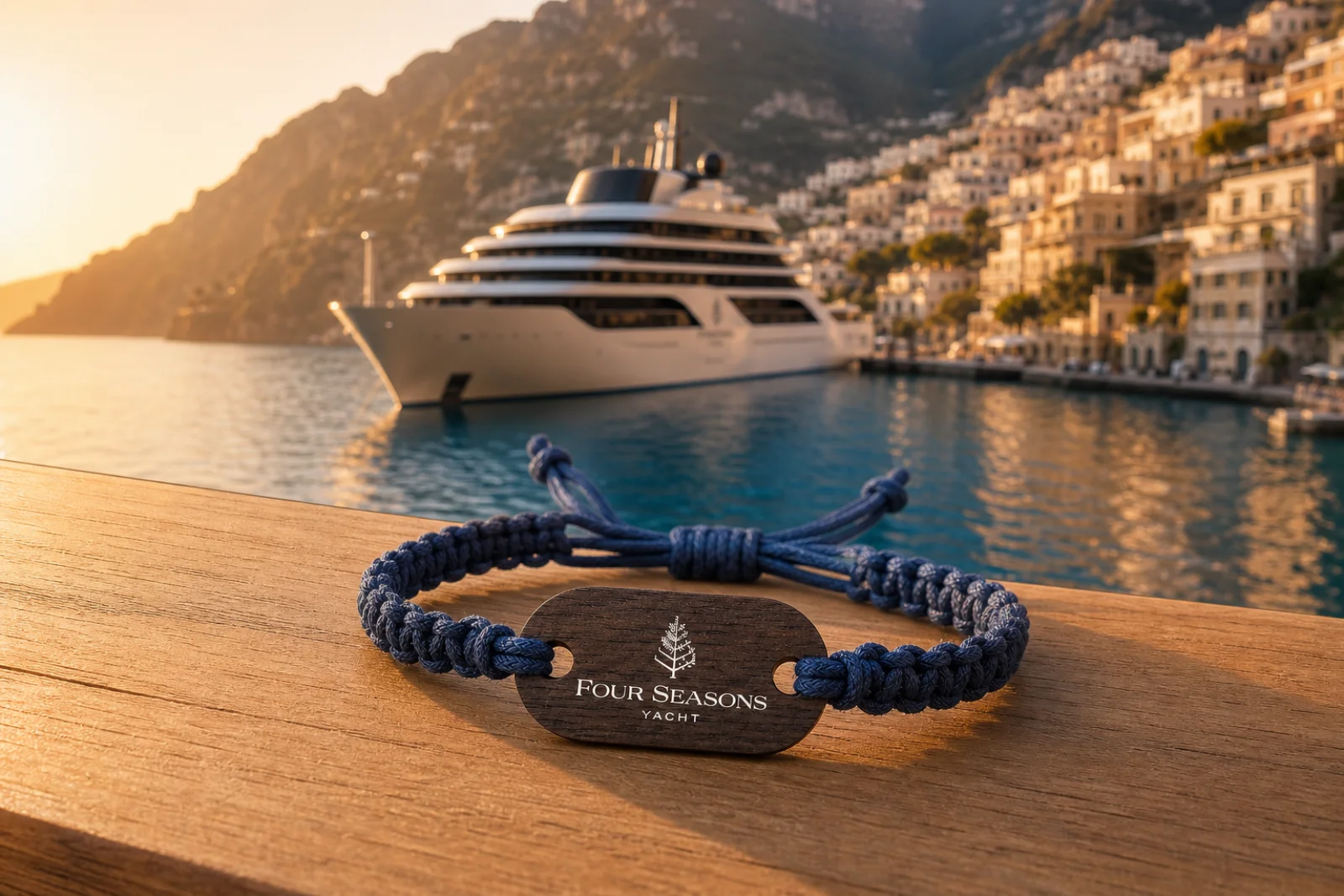
Real maritime proof
A wooden wearable key for Four Seasons Yacht.
We made a bespoke RFID wristband for Four Seasons Yacht: dark walnut plaque, hand-woven navy macramé cord, sliding-knot clasp. We chose the walnut to sit against teak rather than fight it. Proof that a wearable key at sea can be a considered object, not a piece of admission media.
Read the Four Seasons Yacht projectMaritime program delivery
How long does production take?
- 01
We take your reader and lock list
Send the approved lock, reader, encoder and chip requirements, plus who wears what. We work out which touchpoints one wristband can honestly cover.
- 02
We cut and print the sample
We set artwork, material, plaque shape and card dimensions with you, then make a finished sample on the real tooling and dispatch it within 7-10 days.
- 03
You test it aboard
Hold it to every reader it has to work on: cabin lock, gangway handheld, POS, spa door. If one refuses it, we change the construction now rather than after the run.
- 04
We run it and pack by sailing
Three to four weeks from artwork approval. We count, check and pack by sailing, tier and issue sequence, so bands and keys arrive in the order your team hands them out.
Cruise and yacht procurement questions
What maritime hospitality teams ask before ordering.
Can an RFID wristband open a cruise ship cabin door?
Only if the installed cabin-lock system is approved for a wearable. Many are not, and take a CR80 card instead. We work from your confirmed lock and encoding specification, and send a finished wristband to test on a real door first. If the lock refuses it, we make the key as a card, matched to the wristband.
Can the same cruise wristband support dining, spa and onboard purchases?
Sometimes. It depends on whether those platforms accept the same band, or whether a multi-technology construction can carry more than one. We can build the multi-technology body. What we cannot do is make two incompatible systems agree, so we prove it on a sample.
Does PrintPlast supply cruise software, readers or passenger tracking?
No. We make and personalize the physical RFID wristbands, key cards, crew IDs and sleeves. Your locks, readers and onboard software come from your own technology partners.
Can a wearable replace passports, boarding documents or maritime safety procedures?
No, and nobody should sell you one that claims to. A wristband opens the specific systems named in the brief, nothing more. Everything statutory stays where it is.
Which RFID wristbands are suitable for salt water and pools?
We build woven-cord and wood-bead bracelets to IP67, with the RFID components sealed inside the plaque. This rating covers temporary immersion; suitability for sea, pool and shower exposure requires separate exposure evidence and finished-sample testing under the intended conditions. Sunscreen and drying we handle through material choice, checked on the finished sample.
Can children or different guest tiers receive distinct wristbands?
Yes. The sliding-knot clasp fits adult, youth and child wrists off the same run, so tiering becomes a matter of cord color, bead material, plaque shape or an engraved guest number rather than a separate product line.
Can cruise RFID wristbands be reused?
Some constructions can be. It depends on the closure, the condition after a voyage and your cleaning and re-encoding routine. Decide before you order: a wristband built to be kept is not built like one built to be released and reissued.
Can cabin keys, wristbands, crew IDs and sleeves be ordered together?
Yes. Guest wearables, CR80 cabin keys, crew IDs, visitor cards and printed sleeves run as one visual program. Each item keeps its own technical specification, and each design carries its own 500-unit minimum.
What information is needed for a cruise ship RFID quotation?
Quantities by sailing and product type, the approved chip and reader specification, cabin-lock details, voyage length, personalization fields and artwork direction. Minimum is 500 units per design. Samples go out in 7-10 days; bulk runs 3-4 weeks from approval.
Specifications, minimum order and lead times
Published figures for the credential families on this page. Frequencies are matched to the readers already installed on your property, and confirmed on a pre-production sample before the bulk run.
| RFID frequencies | 125 kHz or 13.56 MHz, matched to your installed readers |
|---|---|
| Ingress protection | IP67 on specified constructions; confirm for your chosen wristband |
| Sizing | Sliding-knot clasp on cord models; sizing depends on the chosen design |
| Personalisation | Full-colour UV print, laser engraving and individual numbering, depending on material |
| Materials | FSC-certified wood, woven cord, silicone or recycled PVC, depending on the model |
| Card format | CR80, 0.76 mm (30 mil), ISO/IEC 7810 for standard PVC cards; other materials vary |
|---|---|
| RFID frequencies | 125 kHz or 13.56 MHz, matched to your installed readers |
| Card bodies | FSC-certified wood, 50–80% post-consumer recycled PVC or PPH BioBoard |
| Personalisation | Full-colour print, laser engraving, variable data and numbering, depending on material |
| Minimum order | Typically from 500 units per design; confirm for your chosen product |
|---|---|
| Pre-production samples | Typically 7–10 days; timing confirmed with your quotation |
| Bulk lead time | Typically 3–4 weeks after artwork approval; confirmed with your quotation |
| Production | Made to order for your project |
Build the cabin key and wristband program
One voyage.
One unmistakable standard.
Send the reader list and the sailing schedule. We will tell you what one wristband can honestly cover, make the band and CR80 cabin key to match, and get a sample to you in 7-10 days.