
Last updated: June 2026
Once a hotel decides to move away from virgin plastic key cards, the real question begins: which material? The three credible options in 2026 are genuine wood, plant-based board (our PPH BioBoard), and recycled PVC. All three carry the same RFID chips and work with the property's specified hotel lock system after finished-sample validation — the differences are in feel, cost, end-of-life, and what they say about your brand at the front desk.
The comparison at a glance
| Wooden Key Cards | PPH BioBoard | Recycled PVC | |
|---|---|---|---|
| Raw material | FSC-certified timber (birch, bamboo, cherry) | Compressed plant fibers, bio-based binder | Post-consumer recycled PVC |
| Look and feel | Natural grain, warm, premium; engraving + print | Matte paper-like finish, light, modern | Identical to standard PVC; full gloss print |
| Durability | High — rigid, scratch-tolerant | Good for typical stay cycles | High — same as standard PVC |
| End of life | Biodegradable; often kept by guests | Compostable / biodegradable | Recyclable again where PVC streams exist |
| Plastic content | Zero | Zero / near-zero | 100% recycled (no virgin plastic) |
| Price vs standard PVC | Premium | Modest premium | Near parity |
| Best for | Luxury resorts, design hotels, brand moments | Eco-positioned hotels, compliance reporting | Chains, high-volume, budget-neutral switch |
Wooden key cards — the brand statement
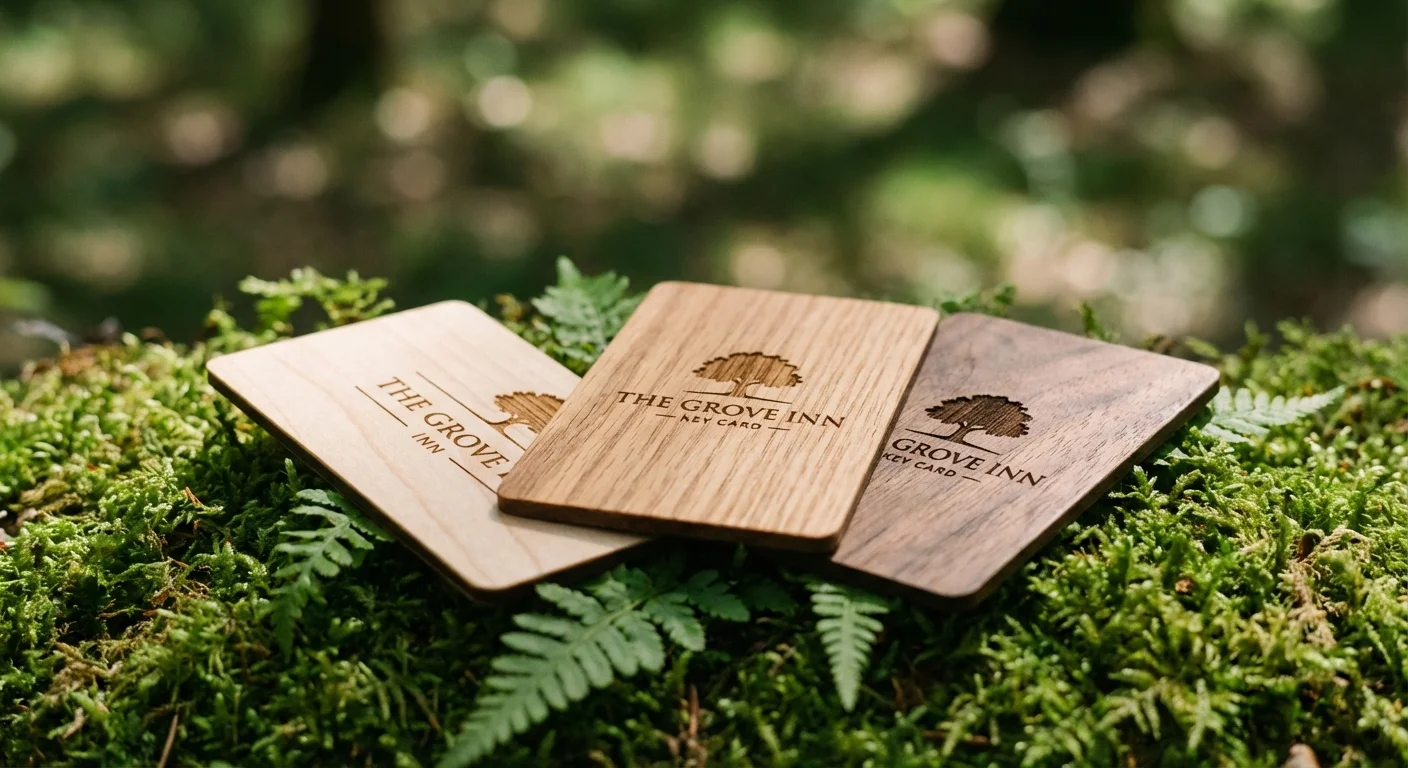
Wooden RFID key cards are the choice when the card itself is part of the guest experience. The natural grain makes every card slightly unique, takes laser engraving and full-color print beautifully, and guests routinely keep them as souvenirs — which turns a disposable object into a branded keepsake. They contain zero plastic, come from FSC-certified forestry, and biodegrade at end of life. The trade-off is price: wood is the most expensive of the three. Five-star resorts and boutique properties absorb this easily because the card replaces a printed brand touchpoint, not just an access token.
PPH BioBoard — the compliance-friendly middle path
PPH BioBoard cards are made from compressed plant fibers and are compostable after use. They feel closer to high-quality cardstock than plastic, print cleanly, and carry a modest premium over standard PVC. For hotels reporting under sustainability frameworks (CSRD and similar), a plant-based, compostable card is the simplest line item to defend: no plastic in, no plastic out. This is the fastest-growing segment among city hotels and eco-certified properties.
Recycled PVC — the budget-neutral switch
Recycled PVC cards are the pragmatic entry point: same durability, same print finish, and near price parity with the standard PVC cards a hotel already buys — but made entirely from post-consumer recycled material. For large chains, switching tens of thousands of cards to recycled PVC removes virgin plastic from the supply chain overnight without a procurement fight. The honest caveat: it is still PVC, so the end-of-life story depends on local recycling streams.
Decision guide by property type
- Luxury resort / 5-star: Wooden cards. The keepsake effect and natural finish justify the premium; pair with wooden RFID wristbands for pools and spas.
- Design-led boutique: Wooden or BioBoard, depending on aesthetic — warm natural grain vs clean matte minimalism.
- Eco-certified or CSRD-reporting hotel: BioBoard. Compostable, plant-based, and easy to document in sustainability reports.
- Chain / group procurement: Recycled PVC for the fleet, wooden cards for flagship properties and suites.
- Budget / midscale: Recycled PVC — the sustainability upgrade that doesn't move the price.
What stays the same across all three
- Lock compatibility: identical RFID chips (13.56 MHz high-frequency or 125 kHz low-frequency) — no lock hardware changes, ever
- Encoding: cards arrive ready for your property management workflow, or blank for on-site encoding
- Custom printing: full-color branding on all three materials
- Minimum order: 500 cards at PrintPlast, any material
Frequently asked questions
Do wooden or bio-based cards fail more often than plastic?
No. Failure is almost always the chip or antenna, not the card body — and all three materials carry the same RFID inlay. See why hotel key cards stop working for the real causes.
Can we mix materials in one property?
Yes, and many hotels do: recycled PVC for standard rooms, wooden cards for suites and VIP guests. The lock system cannot tell the difference.
How do we verify the sustainability claims?
Ask the manufacturer for FSC chain-of-custody documentation (wood), material composition sheets (bio-based board), and recycled-content certificates (recycled PVC). PrintPlast provides all three, plus ISO 14001. You can also estimate your property's impact with our sustainability calculator.
What about magnetic stripe cards?
All three eco materials are available with RFID only. If your property still runs magstripe locks, a hybrid card is possible — but most hotels switching materials take the opportunity to move to contactless. Our hotel key card guide covers the full technology decision.
Still undecided? Order a mixed sample pack with all three materials and let your front desk team and your guests decide.