
Last updated: June 2026
Most hotels do not have an ancillary revenue problem — they have a visibility problem. The spa has open slots, the restaurant has free tables, late checkout is available on half the floors. The offers exist. What is missing is a way to put them in front of the guest at the exact moment the guest is ready to say yes.
Where ancillary offers go to die
Look at where on-property offers live today:
- The check-in conversation. The guest has just landed, is holding luggage, and wants a shower — the worst possible moment to consider a spa treatment for Thursday.
- The in-room compendium. A binder or tablet most guests never open, with content that is expensive to keep current.
- QR tent cards. Easily ignored, frequently outdated, and visually at odds with a luxury room.
- Pre-arrival emails. Sent days before the guest can realistically commit to a dinner time or a treatment slot.
None of these channels is present at the moment of decision: mid-afternoon by the pool, returning to the room before dinner, or the evening before checkout. That timing gap — not guest reluctance — is where ancillary revenue is lost.
The right moment arrives in the guest's pocket
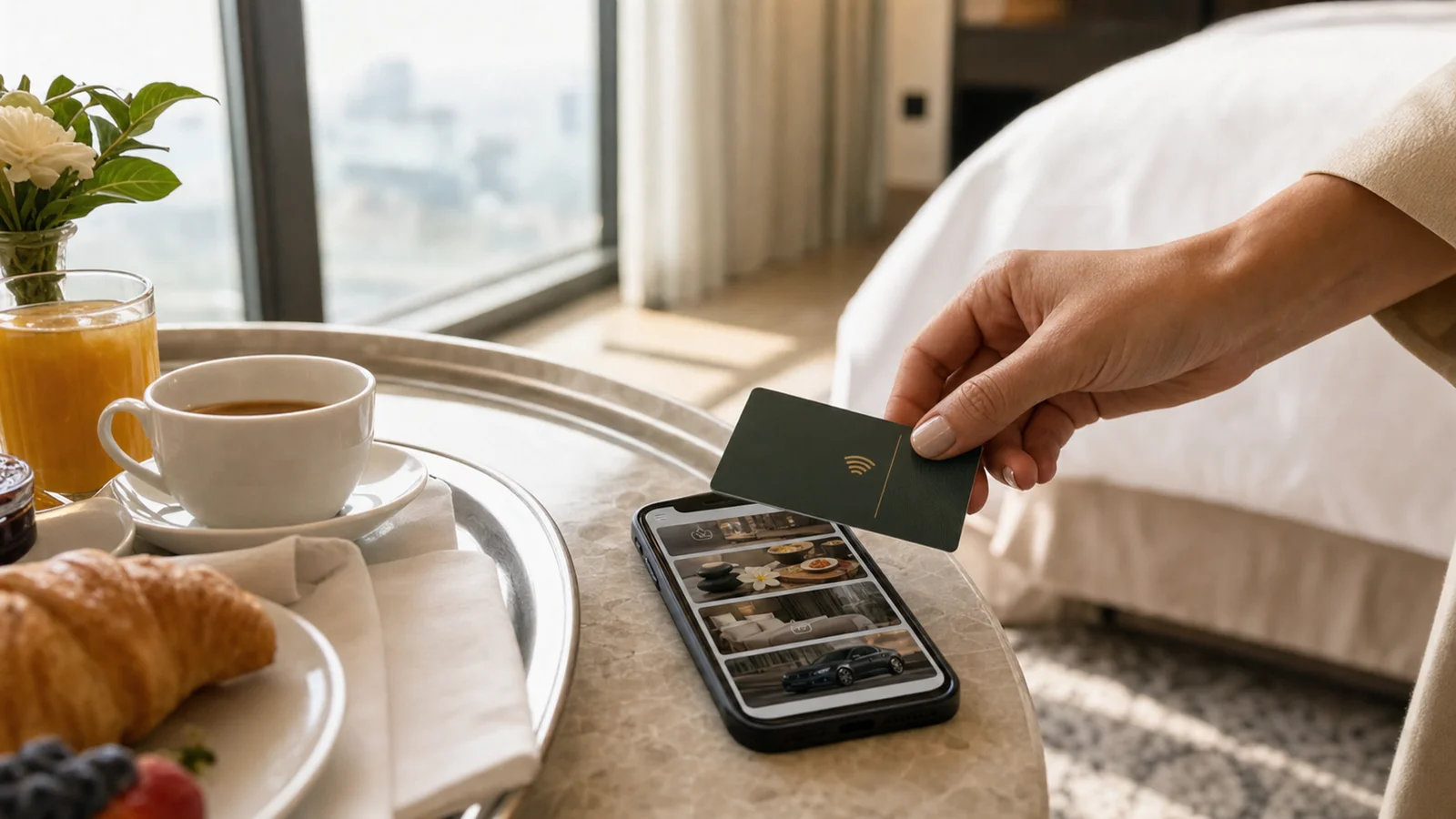
There is one hotel object that is with the guest at all of those moments: the room key. TAP by PrintPlast turns that key into a revenue channel. TAP is a dual-chip NFC key card — one chip opens the door through your existing lock system, the second chip opens an AI concierge web page the instant the guest taps the card on their iPhone or Android NFC phone. No app to download, no account to create, nothing for the guest to learn.
Because the concierge is a living web page rather than printed collateral, the hotel decides what guests see and when: this evening's tasting menu, tomorrow morning's spa availability, a late-checkout option the day before departure, a wine pairing for the in-room dining order.
Four upsell moments the key card unlocks
1. Spa — fill the quiet hours
A guest lounging by the pool at 3 pm is one tap away from your treatment menu. The AI concierge can present spa offers exactly when guests are relaxed and receptive — and the hotel can choose to spotlight the hours that need filling rather than the ones that sell themselves.
2. Dining — capture the pre-dinner decision
The "where shall we eat tonight?" conversation happens in the room between 5 and 7 pm. If your restaurant's menu, tonight's special, and a table request are one tap from the guest's hand, your own outlets enter that conversation before an outside review site does.
3. Late checkout — the easiest yes in hospitality
Late checkout is high-margin, inventory-aware, and almost embarrassingly easy to sell — when the offer reaches the guest the evening before departure. A tap on the key card puts the request a thumb's length away, instead of relying on the guest to call reception and negotiate.
4. Experiences and extras
Airport transfers, cabana rentals, breakfast upgrades, local tours arranged through the concierge desk: anything your team can fulfill, the AI concierge can surface — in the guest's own language, since TAP auto-detects more than 30 of them. The guest from Munich reads your spa menu in German; the guest from São Paulo sees it in Portuguese. No translation project required on the hotel side.
Why the key card beats every other channel
- Total reach. Every guest gets a key. There is no adoption curve, no download barrier, no "small minority of app users" — the channel is handed over at check-in.
- Perfect timing. The card is physically present at the decision moments that compendiums, emails, and check-in scripts all miss.
- Zero friction. One tap opens the concierge. Guests who would never install a hotel app will tap a card they are already holding.
- No operational disruption. The TAP card works with your existing lock system — no lock hardware changes, no new encoding workflow, no IT project. It behaves like the hotel key cards your front desk already issues.
A practical playbook for the first season
Hotels that get the most out of an AI digital concierge treat it like a revenue tool, not a brochure:
- Start with the three highest-margin offers — typically spa, dinner, and late checkout — rather than listing every service on day one.
- Match content to the clock: breakfast and activities in the morning, spa in the afternoon, dining in the early evening, late checkout the night before departure.
- Let the seasonality work for you: promote the pool bar in summer, in-room dining in winter, and event packages around local dates.
- Review what guests actually tap and ask for, and reshape the page monthly — something no printed compendium can do.
Built by the people who make your keys
TAP comes from PrintPlast, a hotel key card manufacturer since 1989 — 37 years of producing cards for more than 250 luxury properties worldwide. That matters for one practical reason: the revenue channel and the room key are the same object, made to the same standard your locks already trust.
Ready to see what your room key could sell? Explore the TAP digital guest experience or contact our team to discuss a rollout for your property.