
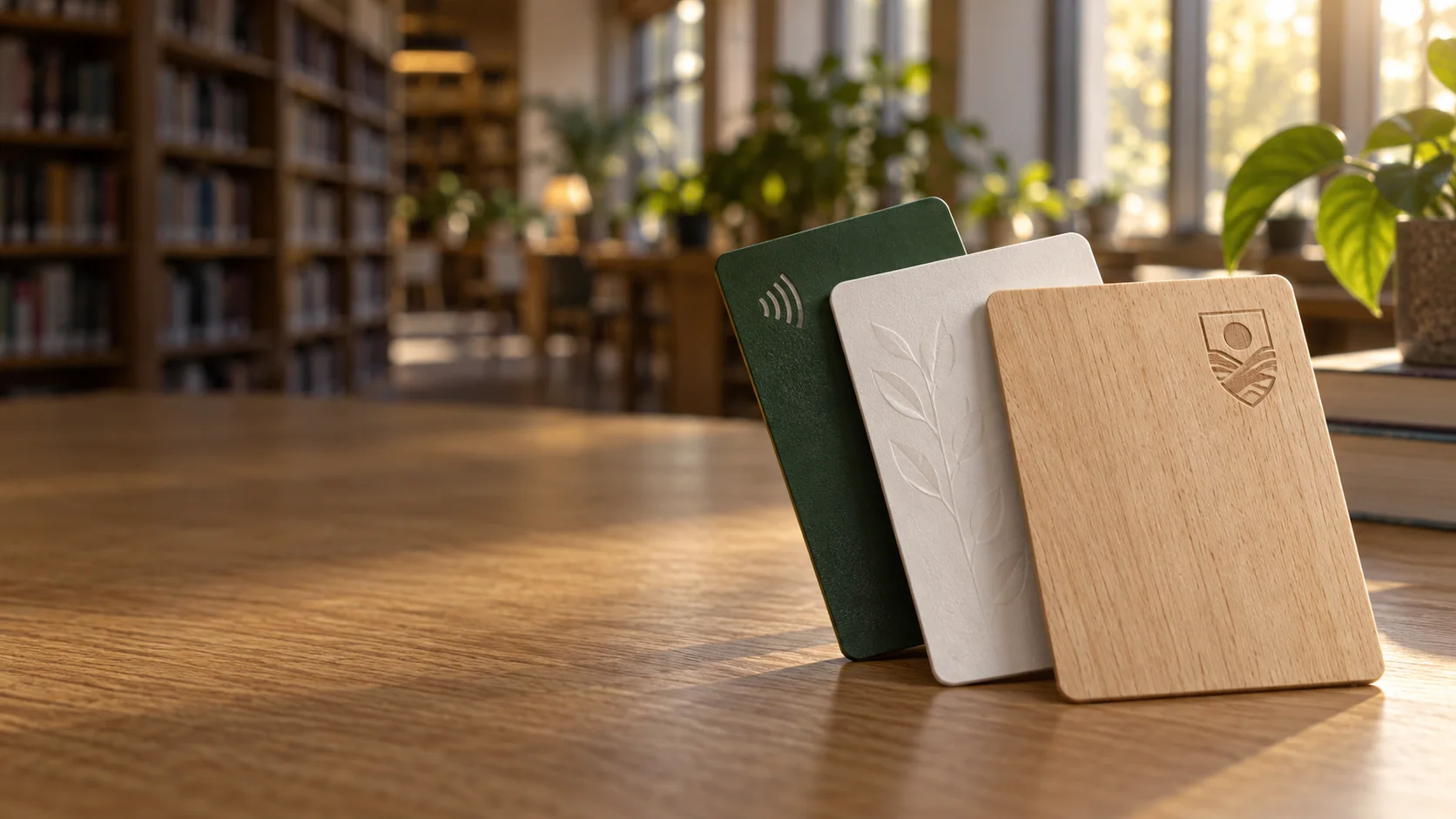
Sustainable student ID cards are RFID campus cards whose card body is made from recycled PVC, plant-based board or wood instead of virgin plastic. The chip inside stays the same, so the card still opens doors, checks out library books and pays in the canteen as before.
PrintPlast has started a material partnership with CampusRFID, a specialist in RFID student ID and campus cards for universities, colleges and schools. The sustainable materials we use for hotel key cards are now available to campus card programmes. CampusRFID designs each card around the institution's readers, data and issuing process. PrintPlast brings its experience with how these materials print, wear and should be documented.
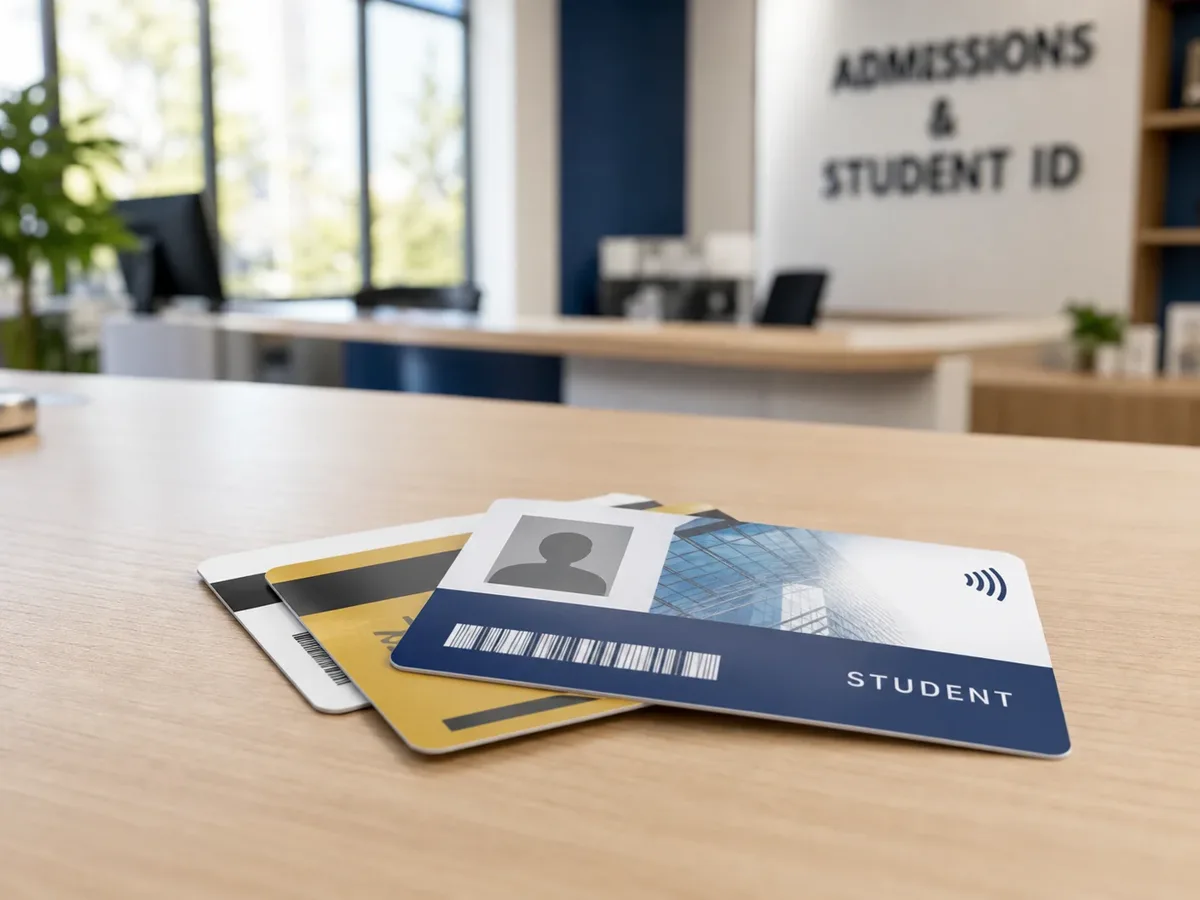
Student ID cards are issued to every new intake. Image: CampusRFID.
Why Universities Are Switching to Sustainable Student ID Cards
A campus card is one of the few objects every student and staff member carries every day. Universities issue a new card to each incoming class, plus replacements for lost and damaged cards all year. Over a few intakes, even a mid-sized institution issues thousands of cards, and most of them are still virgin PVC.
- Sustainability targets reach procurement. Many universities now have sustainability offices, carbon plans and green procurement policies, and card tenders increasingly ask what the card is made of.
- Students notice. The student card is a visible symbol of the institution. A recycled or plant-based card is an easy, tangible way to show that sustainability commitments reach everyday details.
- The switch is low risk. The card format and chip do not change, so readers, printers and card management software can stay in place once the new material has been tested.
Hotels made the same move with room keys. Both use the CR80 card format described in our hotel key card size guide, so lessons from sustainable key cards carry over to student IDs.
Recycled PVC vs Bio-Based vs Wooden Campus Cards
| Recycled PVC | Bio-based board | Wood | |
|---|---|---|---|
| Card body | PVC with recycled content | Plant-derived fibre board | FSC-certified wood |
| Look and feel | Same as a standard student card | Matte, light, natural | Natural grain, premium |
| Photo ID printing | Same as standard PVC | Possible; test on your card printer | Better suited to engraving than photo ID |
| Durability over a study programme | As durable as standard PVC | Good; confirm lamination for heavy use | Rigid; coating recommended |
| End of life | Recyclable where PVC streams exist | Compostable card body; the inlay is separate | Wood body is biodegradable; the inlay is separate |
| Price vs standard PVC | Near parity | Modest premium | Premium |
| Best for | Main student ID issue | Eco-positioned campuses, visitor and event cards | Staff, alumni and special-edition cards |
Recycled PVC student ID cards
Recycled PVC is the easiest switch for the main student card. It prints photos, barcodes and security features like a standard card and lasts a full study programme. The claim to make is specific: how much recycled content, and in which layers. More in our guide to recycled PVC cards.
Bio-based campus cards
A plant-based card body suits institutions that want to move away from PVC altogether, similar to our PPH BioBoard key cards. It is a strong fit for visitor, conference and event cards, and for the main student card once it has passed a printing and durability test.
Wooden ID cards
Wood makes a memorable staff, alumni or honorary card, with the logo and name laser-engraved. The same approach works for wooden key cards in hotels. For full-colour photo ID in high volumes, recycled PVC or bio-based board is usually the better choice.
For a deeper look at the same materials, see our wooden vs BioBoard vs recycled PVC comparison.
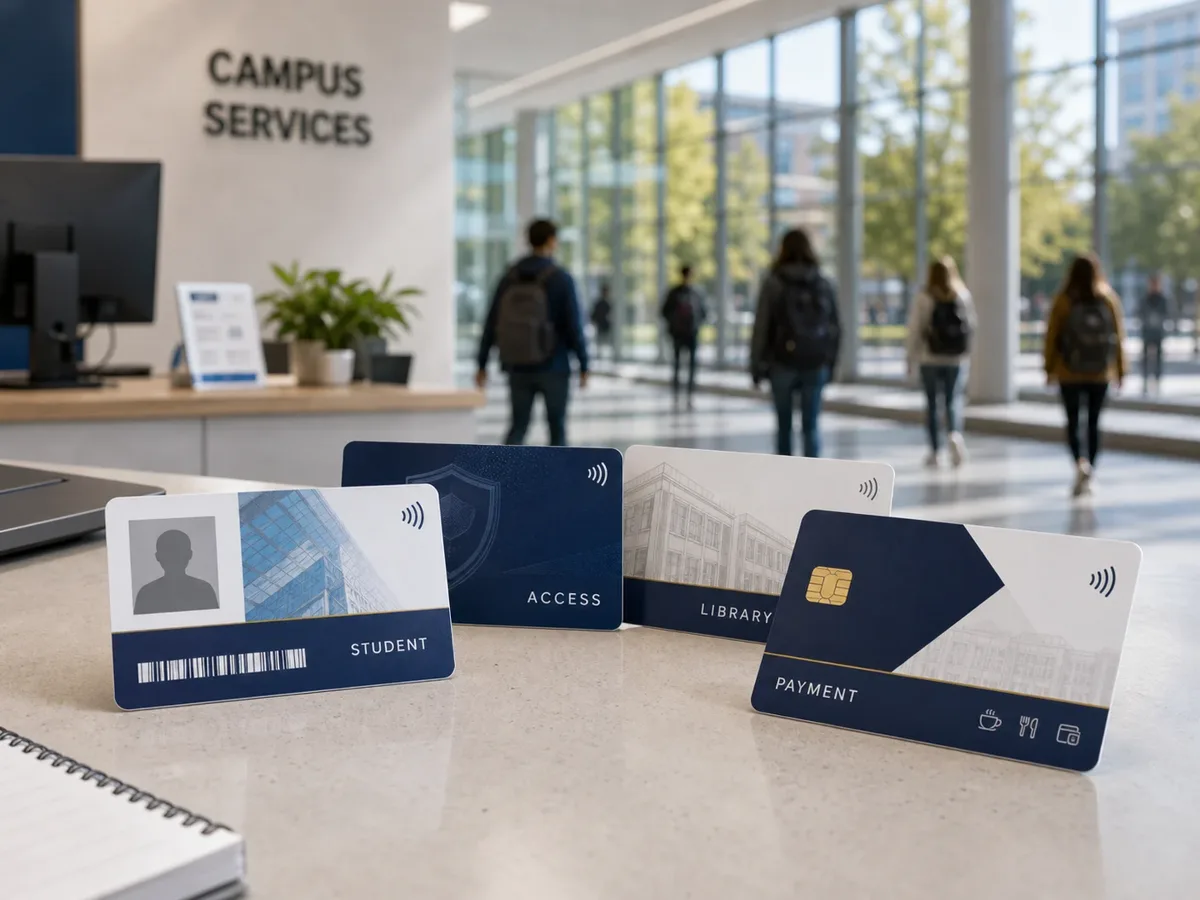
One campus card often combines ID, door access, library and payment. Image: CampusRFID.
Will a Sustainable Card Work With Our Campus Systems?
Yes, if the chip is specified for your readers. The card body has no effect on the electronics:
- Access control and cashless payment run on 13.56 MHz contactless chips (ISO/IEC 14443), with AES-128 encryption where the system needs it.
- Library self-checkout uses 13.56 MHz readers that work with the same card.
- Older 125 kHz proximity readers can be covered with a dual-frequency card during a migration, so one card works on old and new readers.
- Magnetic stripe and barcode can be added where legacy systems still need them.
- Mobile credentials on students' phones work alongside the physical card; they are provisioned by the campus card platform, not by the card.
What changes is the physical side: thickness, surface and how the antenna performs inside the finished card. That is why each construction is checked against the institution's readers on a sample before the full run.
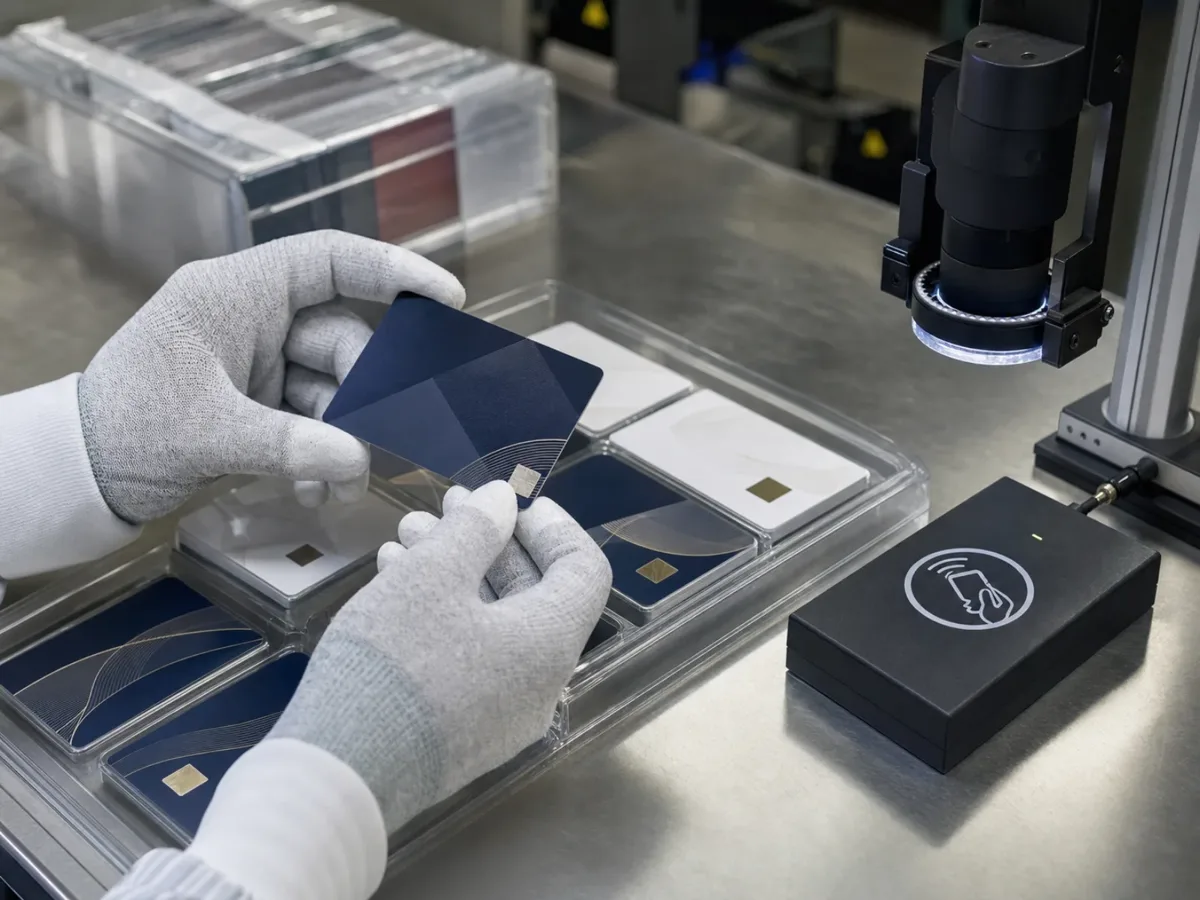
Each construction is checked and reader-tested before a full production run. Image: CampusRFID.
How to Switch to Sustainable Student ID Cards
- List your readers and applications. Door access, library, payment, printing and attendance, with the chip each one reads today.
- Choose the material per card type. For example recycled PVC for students, bio-based board for visitors and wood for staff or alumni.
- Test your card printer. If your card office prints photo IDs in-house, run the new material through that printer before ordering.
- Request the evidence. Recycled-content share, composition statement or FSC chain-of-custody, depending on the material.
- Approve a sample. Test the encoded sample on real readers across campus.
- Plan the rollout. Start with the next intake and replace existing cards as they expire, instead of reissuing everything at once.
The campus card configurator turns these choices into a structured brief: card material, security level, photo ID and printed features.
Sustainability Claims You Can Defend
Keep claims specific. "Card body made from recycled PVC" or "card body made from FSC-certified wood" can be proven with documents. "100% biodegradable student card" usually cannot, because every RFID card also contains a chip, a metal antenna and adhesive layers. Clear wording protects the university's sustainability reporting and avoids greenwashing complaints.
Frequently Asked Questions
Do sustainable student ID cards work with existing campus readers?
Yes. The chip is chosen for your readers, and the card body does not change how it communicates. Every new construction should still be tested on your readers before the full order.
Can we print photo IDs on recycled or bio-based cards?
Recycled PVC prints like standard PVC. Bio-based cards can carry photo ID, but they should be tested in the printer your card office uses. Wooden cards are better suited to engraved staff or alumni cards.
Are sustainable campus cards more expensive?
Recycled PVC is close to the price of standard PVC. Bio-based board costs a modest premium, and wood is the premium option.
Can one card combine access, library and payment?
Yes. A multi-application card can combine student ID, door access, library and cashless payment, as long as every reader and backend supports the chosen chip.
Can we use different materials for different card types?
Yes. Many institutions use recycled PVC for the main student card and a different material for staff, visitor or alumni cards. The readers cannot tell the difference.
Sustainable Cards Beyond the Hotel Room
PrintPlast produces eco-friendly key cards and wristbands for hotels and resorts worldwide. For RFID student ID cards and campus card programmes, CampusRFID is the specialist partner.
Materials: Wooden key cards · PPH BioBoard · Recycled PVC · Contact PrintPlast