
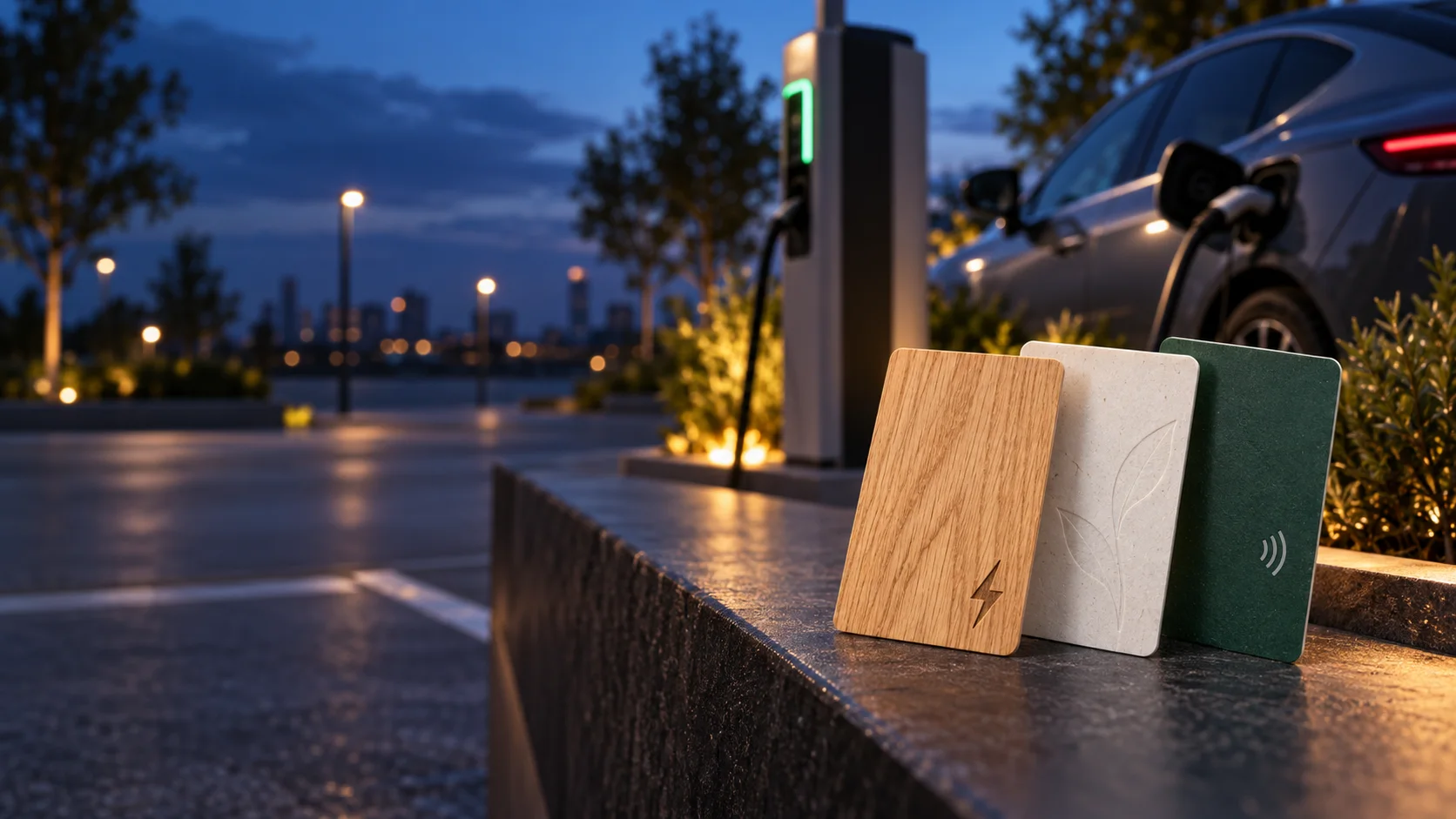
Eco-friendly EV charging cards are RFID charging cards whose card body is made from wood, plant-based fibre board or recycled PVC instead of virgin plastic. The chip and antenna inside are the same as in a standard card, so drivers tap them on the charger exactly as before.
PrintPlast has started a material partnership with ChargeRFID, a specialist in RFID cards and key fobs for EV charging networks, e-mobility service providers and fleets. The sustainable materials that hotels already use for their room keys now go into charging credentials. ChargeRFID specifies, encodes and tests each card against the operator's chargers and backend. PrintPlast brings years of experience with how these materials print, age and should be documented.
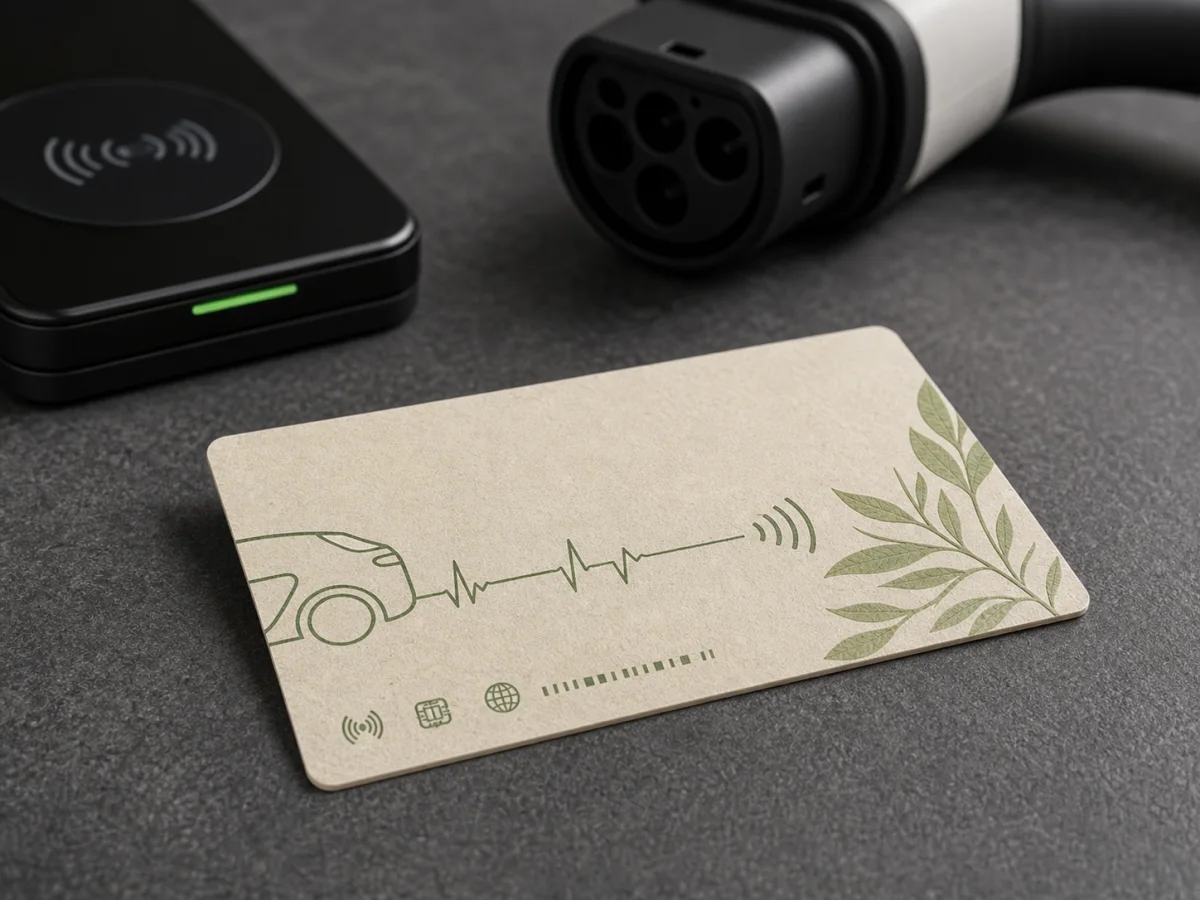
A bio-fibre charging card from ChargeRFID. Image: ChargeRFID.
Why Charging Networks Are Moving to Sustainable RFID Cards
An RFID charging card is often the only physical object a driver receives from a charging network. It lives in a wallet, a glovebox or on a key ring for years, and it carries the operator's brand every time it is used. For a business that sells clean mobility, a virgin PVC card is an easy detail to question.
Three pressures push operators to change the card:
- Brand consistency. Networks, energy suppliers and car brands that promote low-carbon mobility want the physical credential to match the message.
- Procurement and reporting. Fleet customers and corporate buyers increasingly ask suppliers what their cards are made of.
- Claim rules. From 27 September 2026, EU rules under Directive (EU) 2024/825 restrict vague environmental claims such as "eco-friendly" in consumer marketing unless they can be backed up. A card with a documented material is easier to talk about honestly.
Hotels went through the same shift with key cards, and the size is identical: the CR80 format described in our hotel key card size guide. That is why the material experience transfers directly to charging cards.
Wooden vs Bio-Fibre vs Recycled PVC Charging Cards
All three materials carry the same chip. The differences are in look, durability in daily use, end of life and cost.
| Wooden card | PPH bio-fibre card | Recycled PVC card | |
|---|---|---|---|
| Card body | FSC-certified wood, such as cherry or bamboo | Compressed plant fibres with a bio-based binder | PVC with recycled content |
| Look and feel | Natural grain, warm, premium | Matte, light, paper-like | Same as a standard plastic card |
| Branding | Laser engraving, print on suitable constructions | Full-colour print on both sides | Full-colour print, matte or gloss |
| Daily use | Rigid and scratch-tolerant; coating recommended against moisture | Good for wallet use; test for outdoor and vehicle exposure | As durable as standard PVC |
| End of life | Wood body is biodegradable; the inlay is separate | Compostable card body; the inlay is separate | Recyclable where PVC streams exist |
| Price vs standard PVC | Premium | Modest premium | Near parity |
| Best for | Premium, automotive and launch programmes | Green energy and eco-positioned networks | High-volume public and fleet programmes |
For a deeper look at the same three materials in hotels, see our wooden vs BioBoard vs recycled PVC comparison.
Wooden RFID charging cards and key fobs
Wood is the choice when the card is part of the brand experience: a premium subscription, a car launch or a members' programme. Every card has its own grain, and engraved logos and numbers are permanent. The same approach works for wooden key cards in hotels. ChargeRFID offers wooden EV charging cards and matching wooden key fobs.
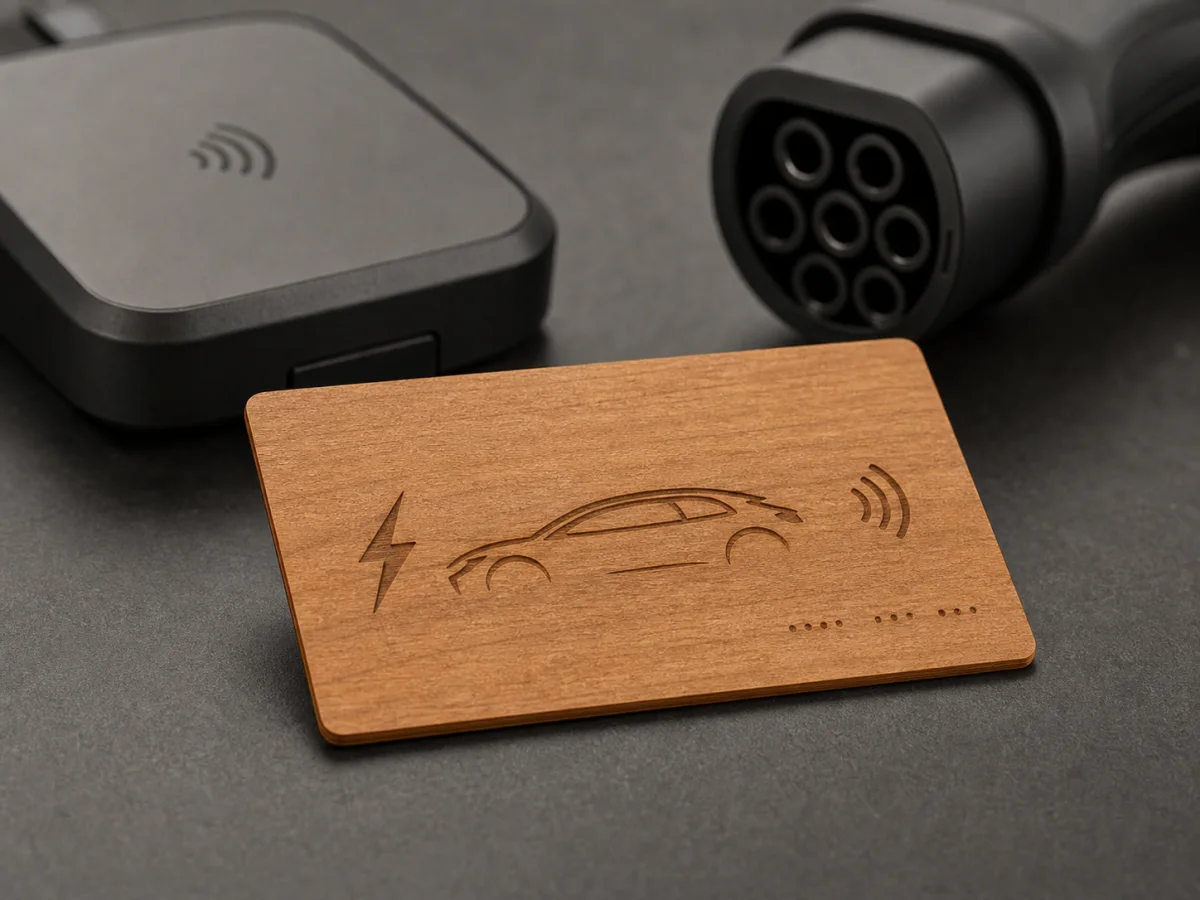
Engraving gives wooden charging cards a permanent logo and card number. Image: ChargeRFID.
Biodegradable bio-fibre charging cards
A bio-fibre card replaces the PVC body with plant-based board, similar to our PPH BioBoard key cards. It takes full-colour print, feels close to premium card stock and suits networks that want a non-PVC card without the cost of wood. ChargeRFID documents the exact material for each order of biodegradable EV charging cards, including what happens to the chip and antenna at end of life.
Recycled PVC charging cards
Recycled PVC is the pragmatic switch for large programmes. It looks, prints and lasts like the card drivers already know, at close to the same price. The claim to make is specific: how much recycled content, and in which layers. More in our guide to recycled PVC cards.
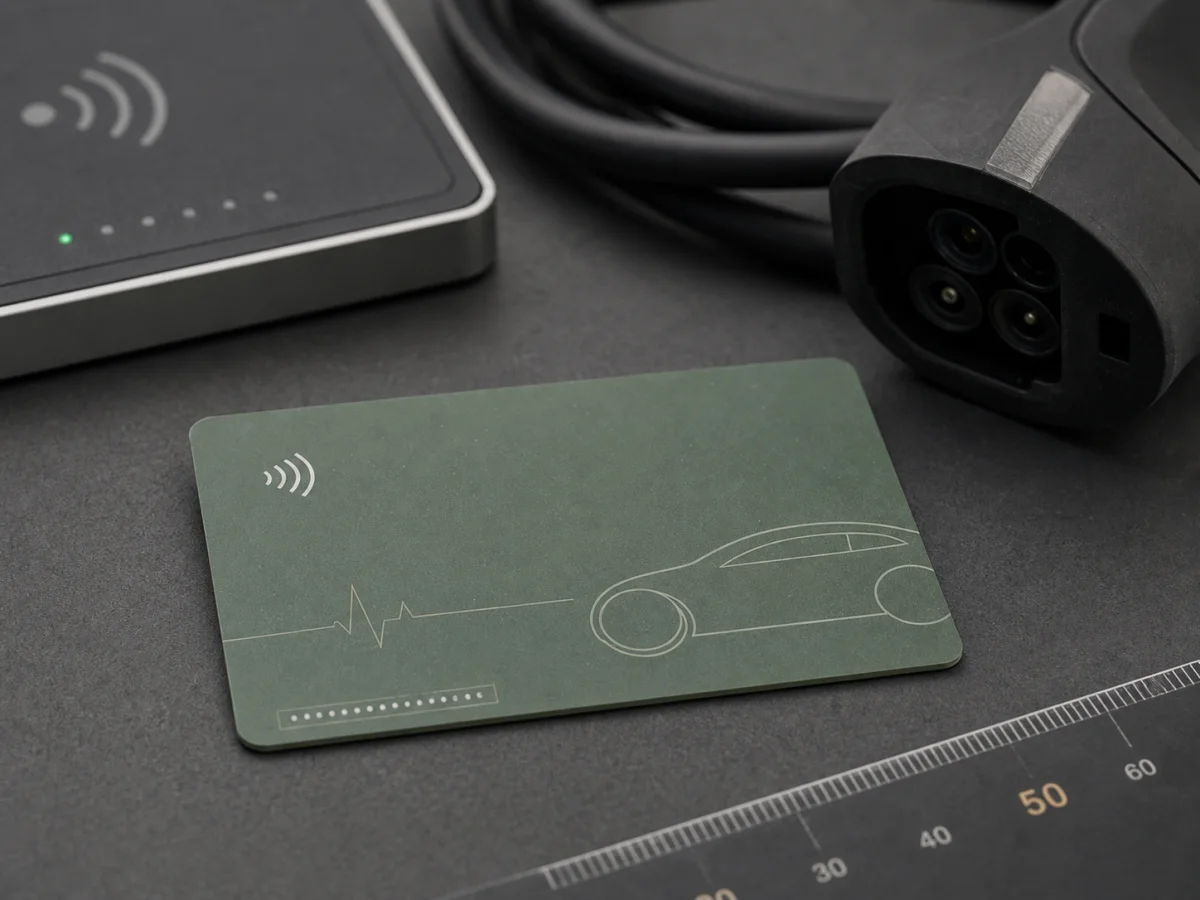
Recycled PVC keeps the classic plastic card feel. Image: ChargeRFID.
Do Eco-Friendly Charging Cards Work With Every Charger?
Yes, when the chip is specified for the network. The material has no effect on how a charging session is authorised:
- The charger's reader reads the card's chip identifier (UID) at 13.56 MHz.
- The charger sends that identifier to the charging management system, usually over OCPP.
- The backend checks the identifier against the driver or fleet account and starts the session.
What does need attention is the physical side. Wood, fibre board and coatings change the card's thickness and how the antenna performs once the card is assembled. The identifier format also matters: some backends expect a 4-byte UID and others a 7-byte UID, in hexadecimal or decimal. That is why every construction is tested on real charger hardware before the full run. As with hotel keys, cards rarely fail because of the card body; failures come from the chip or antenna, as explained in why hotel key cards stop working.
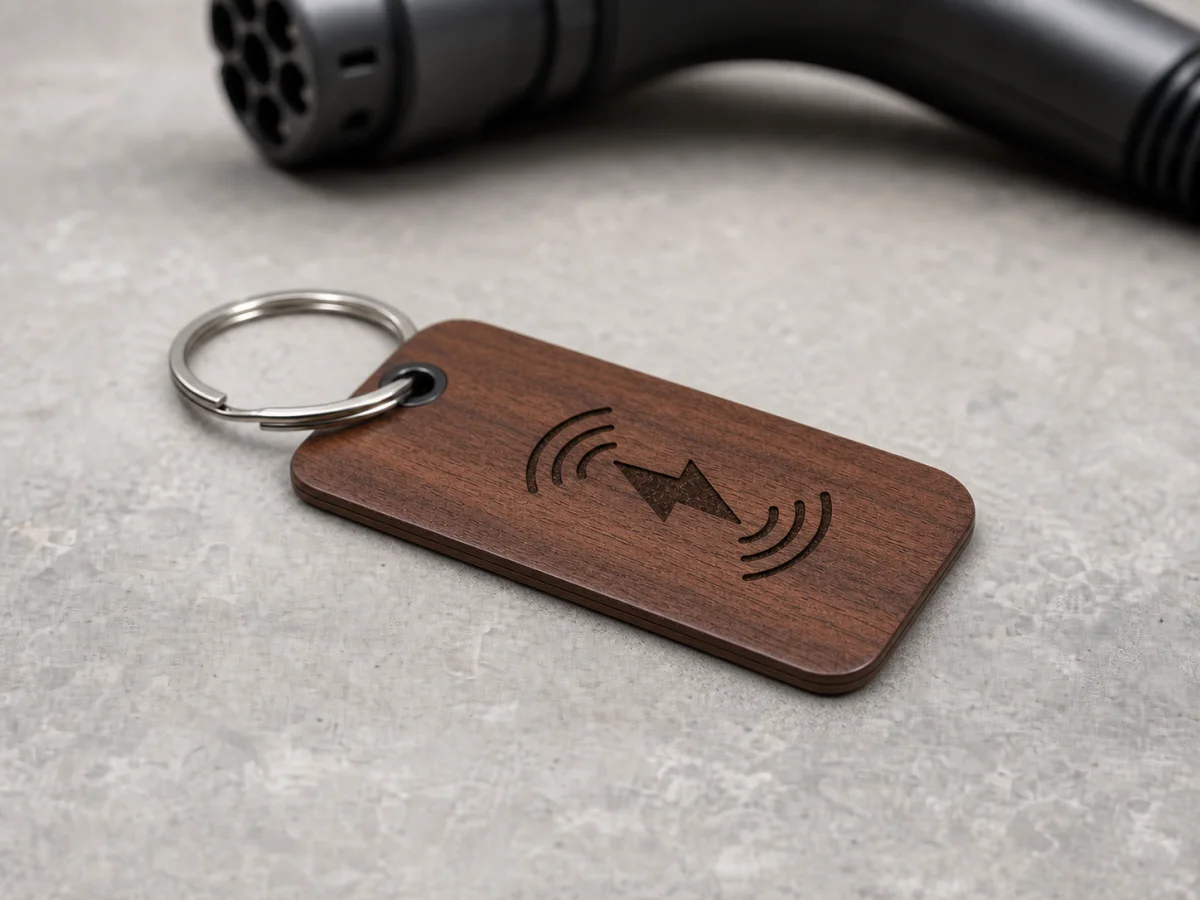
The same materials are available as key fobs for drivers who prefer a tag on the key ring. Image: ChargeRFID.
How to Specify Sustainable EV Charging Cards
A good brief keeps the material, the electronics and the sustainability evidence as separate decisions:
- Chip and identifier. Match frequency, chip type and UID format to your chargers and backend. Choose secure, AES-authenticated chips only if your authorisation model needs them.
- Material and evidence. Pick the card body, then request the matching documents: FSC chain-of-custody for wood, a composition statement for bio-fibre and the recycled-content share for recycled PVC.
- Use environment. Wallet, glovebox, depot or outdoor use decides the coating and lamination.
- Artwork and variable data. Card numbers, QR codes and driver or account references, printed or engraved.
- Data file. A UID-to-account mapping file your backend can import.
- Sample test. Approve a finished sample on live chargers before production.
- Packaging. Sleeves, carriers or programme packs for mail-out and onboarding.
Sustainability Claims You Can Defend
The safest claim is a specific one. "Card body made from FSC-certified wood" or "card body contains recycled PVC" can be proven. "100% biodegradable card" usually cannot, because every RFID card also contains a chip, a metal antenna and adhesive layers. Home composting, industrial composting and general biodegradation are also different claims. Agree the exact wording with your supplier before it goes on the card or the website.
Frequently Asked Questions
Do wooden RFID charging cards work with public chargers?
Yes. A wooden charging card contains the same 13.56 MHz chip as a plastic card. As long as the chip and identifier format match the network, public and private chargers read it the same way. The finished card should still be tested on the target charger, because wood and coating affect antenna performance.
Are biodegradable RFID cards fully biodegradable?
The card body can be, but the complete card is not. The chip, antenna and bonding layers are separate components. A correct claim describes the card body and states the intended end-of-life route.
Is a recycled PVC charging card as durable as a standard card?
Yes. Recycled PVC cards print and wear like standard PVC cards, which makes them the easiest switch for large public and fleet programmes.
What is the minimum order for eco-friendly EV charging cards?
At ChargeRFID, wooden charging cards start from 250 pieces, and bio-fibre and recycled PVC cards from 500 pieces, depending on construction and chip.
Can one charging programme use different materials?
Yes. Many operators issue recycled PVC cards to the main driver base and wooden cards or key fobs for premium tiers or launches. The charger cannot tell the difference.
Sustainable Cards Beyond the Hotel Room
PrintPlast produces eco-friendly key cards and wristbands for hotels and resorts worldwide. For EV charging cards and key fobs, ChargeRFID is the specialist partner.
Materials: Wooden key cards · PPH BioBoard · Recycled PVC · Contact PrintPlast